

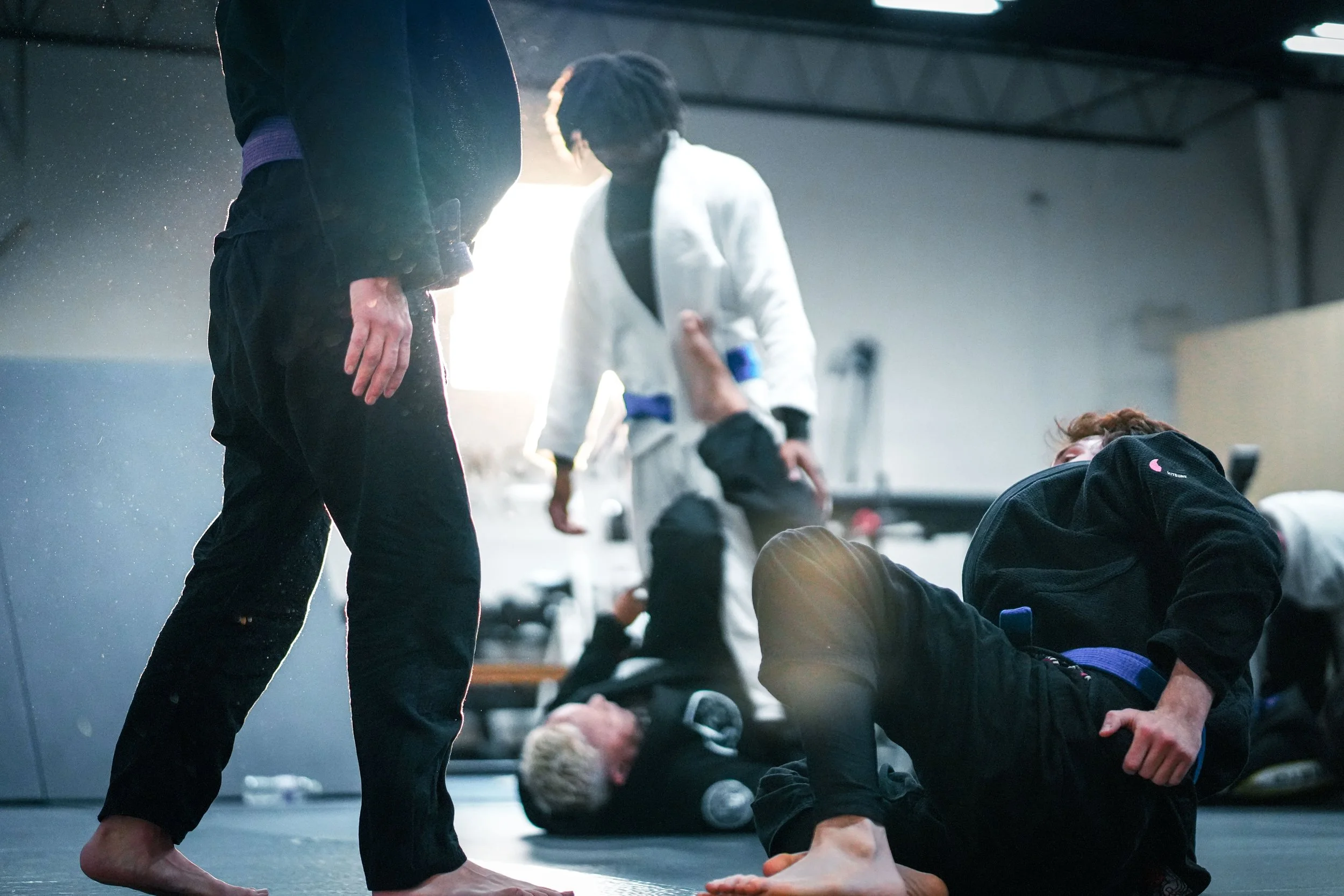
How Often Should a Beginner Train BJJ? A Realistic Guide for Busy Adults
Most Brazilian Jiu-Jitsu beginners can make steady progress by training two or three times per week. The right schedule, however, is the one you can maintain consistently.
You decide you are finally going to try Brazilian Jiu-Jitsu.
Then you look at the class schedule.
There are morning classes, evening classes, fundamentals classes, gi classes, and no-gi classes. Some students seem to be at the gym nearly every day.
Suddenly, starting BJJ feels like it might require rebuilding your entire life around training.
It does not.
For most beginners, training Brazilian Jiu-Jitsu two or three times per week is enough to make meaningful progress.
You do not need to train every day. You do not need to organize your life like a professional athlete. You do not need to feel guilty because someone else attends more often than you do.
The best training schedule is not necessarily the most ambitious one.
It is the schedule you can maintain consistently while still managing work, family, sleep, recovery, and everything else that happens outside the gym.
Is Two Days per Week Enough for BJJ?
Yes.
Two classes per week is a perfectly reasonable starting point for a Brazilian Jiu-Jitsu beginner.
At that frequency, you can begin learning the major positions, improve your movement, become familiar with the language of jiu-jitsu, and develop your conditioning without overwhelming yourself.
You may not remember every detail from one class to the next. That is normal.
Brazilian Jiu-Jitsu introduces a large amount of unfamiliar information. You are learning techniques, terminology, body positioning, timing, and how to move with another person at the same time.
Two classes per week gives you regular exposure while allowing enough time for your body and mind to adjust.
It can be especially effective for people who are:
Completely new to martial arts
Returning to exercise after a long break
Balancing training with a demanding work schedule
Managing family responsibilities
Already participating in other sports or workouts
Concerned about soreness or recovery
Two days per week may not feel like much when you compare yourself to someone training five or six days.
But two consistent classes every week add up to more than 100 training sessions over the course of a year.
That is a substantial amount of time on the mat.
Is Three Days per Week Better?
For many students, three classes per week is an excellent long-term schedule.
It provides enough repetition that techniques begin to feel more familiar, while still leaving several days available for recovery and other commitments.
Training three times per week can help because you have less time between sessions to forget what you practiced. You may see the same positions repeatedly and begin recognizing how different techniques connect.
A common beginner schedule might look like:
Monday
Wednesday
Saturday
Another student may prefer:
Tuesday
Thursday
Friday
There is no universal combination of days that works best.
The goal is to spread the training out in a way that fits your life and gives your body enough time to recover.
Three days per week is often enough for someone who wants to improve steadily without making BJJ the center of every evening and weekend.
Should Beginners Train BJJ Every Day?
Usually not at first.
Some people become excited after their first few classes and immediately want to attend every session on the schedule.
The enthusiasm is good.
The sudden jump in training volume may not be.
Your body needs time to adjust to the movements and physical demands of grappling. Your neck, hands, hips, back, and core may be working in ways they are not used to.
Even someone who already lifts weights, runs, or participates in another sport may experience unusual soreness after beginning BJJ.
Training every day before your body has adapted can leave you exhausted, overly sore, or mentally overwhelmed.
It may also make normal beginner frustration feel worse. When every spare hour is devoted to a difficult new activity, a few challenging classes can start to feel like failure rather than part of the learning process.
Beginning with two or three classes per week gives you room to adapt.
You can always increase your training later.
How Long Should You Train Twice per Week Before Adding More?
There is no exact timeline.
Some students feel comfortable adding a third class after a few weeks. Others may stay at two classes per week for months or years because that schedule fits their lives.
Consider adding another class when:
You are recovering well between sessions
You regularly look forward to training
Your current schedule feels manageable
You are not neglecting sleep or other responsibilities
You want more repetition
Your body no longer feels unusually sore after every class
You do not need to add another day simply because you believe a “serious” student should train more.
A serious student can train twice per week.
Seriousness is better measured by consistency, attention, and the willingness to keep learning than by the number of days someone appears at the gym.
How Much Progress Can You Make Training Twice per Week?
More than many beginners expect.
Progress in Brazilian Jiu-Jitsu rarely feels smooth.
You may have a class where everything seems to click. Then you may return two days later and feel as though you have forgotten all of it.
That happens whether you train twice per week or six times per week.
When training twice per week, early progress may include:
Recognizing the major positions
Remembering how to perform a basic escape
Learning when you are in danger
Improving your balance and movement
Becoming more comfortable working with a partner
Breathing more calmly during live training
Understanding instructions more quickly
Feeling less lost when a round begins
Those are meaningful improvements.
A new student sometimes expects progress to mean submitting more people. That is not a useful early measurement.
In the beginning, simply understanding what is happening is progress.
What Matters More: Frequency or Consistency?
Consistency.
Training five times one week and then disappearing for three weeks is usually less productive than training twice every week.
Jiu-jitsu is learned through repeated exposure over time.
Your body gradually becomes familiar with the movements. Your mind begins recognizing positions. Techniques that once felt awkward become more natural.
That process depends on returning regularly.
A sustainable schedule also makes training easier to integrate into your life. The same days and times begin to feel routine rather than like appointments you have to negotiate with yourself each week.
You may know that Tuesday and Thursday evenings are training nights. Your family knows it. Your work schedule accounts for it.
Once the routine is established, consistency becomes much easier.
How Should Work and Family Affect Your BJJ Schedule?
They should affect it a lot.
Most adult Brazilian Jiu-Jitsu students are not professional athletes. They have careers, families, appointments, travel, household responsibilities, and unpredictable weeks.
A realistic training plan needs to account for that.
It is easy to create a perfect schedule while feeling motivated:
BJJ five days per week
Strength training three days per week
Mobility every morning
Meal preparation every Sunday
Eight hours of sleep every night
Then a work deadline appears. A child gets sick. Traffic is terrible. You sleep badly. Suddenly, the perfect plan collapses.
A better approach is to identify:
The minimum number of classes you can attend during a difficult week
The number you would ideally attend during a normal week
An optional additional class when time and recovery allow
For example:
Minimum: Two classes
Normal goal: Three classes
Optional: Saturday open mat or an additional fundamentals class
This creates flexibility without making every missed class feel like a failure.
Should Beginners Only Attend Fundamentals Classes?
Fundamentals classes are often the best place to begin, but they do not necessarily have to be the only classes you attend.
A fundamentals class usually focuses on core movements, positions, escapes, and techniques that every student needs to understand.
The pace may also be easier for a new student to follow.
Depending on the academy, beginners may also be welcome in regular gi or no-gi classes. Those classes can expose you to a wider range of positions and training partners.
A good starting schedule might include:
One fundamentals class
One regular gi or no-gi class
Another beginner may prefer to attend two fundamentals classes until they feel more comfortable.
The best approach is to ask the instructor which classes are most appropriate for your experience level.
Should You Train Gi and No-Gi in the Same Week?
You can.
Some beginners worry that training both styles will make learning more confusing.
There are differences between gi and no-gi jiu-jitsu, particularly in the available grips and the pace of certain exchanges. However, many of the foundational concepts overlap.
You are still learning how to:
Control distance
Maintain position
Escape
Pass the guard
Use your hips
Protect your limbs
Recognize submissions
Move with another person
Training both styles can help you understand how the same concepts apply in different situations.
That said, you do not have to split your time evenly.
If your schedule allows you to attend one gi class and one no-gi class, that is fine.
If you strongly prefer one format, you can spend more time there.
The style you enjoy and attend consistently will usually help you more than an idealized schedule you rarely follow.
How Should Strength Training Fit Around BJJ?
Strength training can support your jiu-jitsu, but it should not leave you too fatigued to participate in class.
A beginner does not need an advanced strength-and-conditioning program to start BJJ.
If you already lift weights, you may need to adjust your routine while your body adapts to grappling.
For example, a person training BJJ twice per week may strength train two or three times per week. Someone training BJJ four times may need fewer lifting sessions or shorter workouts.
You should pay attention to how the activities affect each other.
If a heavy leg workout leaves you unable to move well during class, the schedule may need to change. If your grip and back are exhausted before every BJJ session, your pulling volume may be too high.
Strength training should support your time on the mat, not constantly compete with it.
For general health, many students also benefit from walking, light mobility work, and easy cardiovascular exercise.
The entire routine does not need to be intense.
How Important Is Recovery for BJJ Beginners?
Very important.
Recovery is when your body adapts to training.
That includes more than taking a day off.
Basic recovery habits include:
Getting enough sleep
Eating enough food to support your activity
Staying hydrated
Taking care of minor soreness before it becomes a larger problem
Communicating with your coach about injuries
Choosing controlled training partners
Avoiding unnecessary intensity
Taking a lighter day when needed
Beginners sometimes assume every round should be exhausting.
It should not.
Some rounds may be physically demanding. Others may be slower and more technical. You should be able to adjust your pace based on your experience, goals, and how your body feels that day.
Training hard and training recklessly are not the same thing.
What If You Are Still Sore When the Next Class Arrives?
Some soreness is common when beginning a new activity.
You may feel stiffness in muscles you did not realize you were using. That does not always mean you need to skip class.
However, there is a difference between general muscle soreness and pain that affects how you move.
Mild soreness may improve once you warm up. Sharp pain, joint pain, significant swelling, or discomfort that changes your normal movement deserves more attention.
You can also attend class without treating every round like a test.
Tell the instructor or your training partner that you are sore and need to keep the pace controlled.
You may be able to participate in the technical portion of class and reduce the intensity of live training.
If something feels injured rather than simply sore, take it seriously and seek appropriate medical guidance when necessary.
Missing one class is better than turning a manageable problem into several weeks away from the mat.
Should You Train When You Are Tired?
It depends on the kind of tired.
Sometimes you feel mentally drained after work, but you are physically capable of training. In those cases, going to class may leave you feeling better.
Other times, you are severely sleep-deprived, physically exhausted, or beginning to feel sick.
That may be a better night to recover.
You do not need to create a strict rule that you always train regardless of how you feel. You also do not need to skip class every time motivation is low.
Try to separate:
I do not feel like going
My body genuinely needs rest
Those are not always the same thing.
A sustainable training habit includes knowing when to push through ordinary reluctance and when to recognize that rest is the more responsible decision.
What If You Miss a Week?
Come back the following week.
You do not need to make up every missed class.
Work travel, vacations, illness, family obligations, and busy periods are part of adult life. Missing time does not erase everything you have learned.
The longer you train, the more you will recognize that progress happens across months and years—not from maintaining a flawless weekly attendance record.
The most important skill is returning.
Do not wait until you feel completely caught up, perfectly conditioned, or ready to train at your previous pace.
Attend the next class you can.
Can You Train Too Much BJJ?
Yes.
More training can lead to faster progress, but only when you can recover from it.
Signs that your training volume may be too high include:
Persistent exhaustion
Declining performance
Constant soreness
Irritability
Difficulty sleeping
Reduced enthusiasm for training
Recurring minor injuries
Feeling obligated to attend rather than wanting to learn
Neglecting work, family, or other responsibilities
Training should challenge you, but it should also fit into a healthy life.
There may be periods when you intentionally increase your volume, such as preparing for a tournament. That does not mean the same schedule needs to continue year-round.
Your ideal frequency can change as your goals and circumstances change.
How Often Do Competitive BJJ Students Train?
Competitive students often train more frequently than recreational beginners.
Someone preparing seriously for tournaments may attend class four, five, or six days per week. Some athletes also train more than once per day.
That schedule is not necessary for most people.
Competitive athletes may organize their sleep, nutrition, work, and recovery around performance. They may also have years of experience gradually building their training capacity.
A first-month beginner should not look at an advanced competitor’s schedule as the minimum required to participate.
You are allowed to have different goals.
You can learn BJJ, improve your fitness, become technically skilled, and be a valuable member of the academy without training like a professional athlete.
A Realistic BJJ Schedule for Beginners
Here are a few examples of schedules that can work.
Two-Day Schedule
Tuesday: Fundamentals class
Thursday: Gi or no-gi class
This works well for someone who is new to exercise, balancing a busy schedule, or trying to build the habit gradually.
Three-Day Schedule
Monday: Fundamentals class
Wednesday: Gi or no-gi class
Saturday: Regular class or open mat
This provides more repetition while leaving recovery days between most sessions.
BJJ and Strength-Training Schedule
Monday: BJJ
Tuesday: Strength training
Wednesday: Rest or light activity
Thursday: BJJ
Friday: Strength training
Saturday: Optional BJJ
Sunday: Rest
This can work for someone who wants to maintain strength training while learning jiu-jitsu.
These are examples, not rules.
Your schedule should reflect the classes available, your responsibilities, your recovery, and the type of routine you are likely to maintain.
How Often Should You Train at Movement Art?
For most new students at Movement Art, two or three classes per week is a strong place to begin.
A beginner may start with fundamentals classes and gradually add gi or no-gi sessions as they become more comfortable.
Movement Art offers adult classes at different times throughout the week, making it possible to build a schedule around work, family, and other responsibilities.
Your coaches can help you decide which classes make sense based on:
Your experience
Your current fitness level
Your availability
Your goals
Your interest in gi or no-gi
Any previous injuries or limitations
There is no expectation that a beginner attend every class.
The goal is to create a routine that helps you learn while making you want to keep coming back.
Start With a Schedule You Can Maintain
You do not need the perfect Brazilian Jiu-Jitsu schedule.
You need a realistic one.
For many beginners, that means two classes per week. For others, three feels better. Some students eventually train nearly every day, while others continue making progress with a smaller and more consistent routine.
Do not judge your schedule by someone else’s availability.
A college student, a professional fighter, a parent of three, and someone working unpredictable shifts may all train at the same academy. Their weekly routines will naturally look different.
What matters is returning often enough to learn, recovering well enough to enjoy the process, and building a routine that still works several months from now.
Schedule a free introductory class at Movement Art Jiu-Jitsu in Warminster and let our coaches help you find the right place to begin.
Frequently Asked Questions
How many times per week should a BJJ beginner train?
Most beginners can make steady progress by training two or three times per week. This provides regular practice while allowing time for recovery.
Is training BJJ once per week worth it?
Training once per week is better than not training, especially when life is unusually busy. Progress may be slower, but regular attendance still allows you to learn and stay connected to the academy.
Is two days per week enough to improve at BJJ?
Yes. Two consistent classes per week can produce meaningful progress, particularly for beginners.
Can a beginner train BJJ three days in a row?
It is possible, but many beginners recover better when classes are spread throughout the week. Pay attention to soreness, fatigue, and training intensity.
Should beginners train BJJ every day?
Most beginners do not need to train every day. Starting with two or three classes per week allows the body and mind to adapt before increasing training volume.
How long does it take to get better at BJJ?
Progress varies based on attendance, instruction, previous experience, fitness, and individual learning style. Most beginners begin feeling more comfortable with the major positions after several weeks or months of consistent training.
Should I attend fundamentals or regular BJJ classes?
Fundamentals classes are an excellent starting point. Depending on the academy, beginners may also attend regular gi or no-gi classes. Ask the instructor which sessions are appropriate for you.
Can I lift weights and train BJJ?
Yes. Many students combine strength training with BJJ. The schedule should provide enough recovery so that one activity does not consistently interfere with the other.
What should I do if I miss a week of training?
Return to the next class you can attend. There is no need to make up every missed session or wait until you feel completely prepared.
Can I try a class before choosing a schedule?
Yes. Movement Art offers a free introductory class for local residents interested in trying Brazilian Jiu-Jitsu.
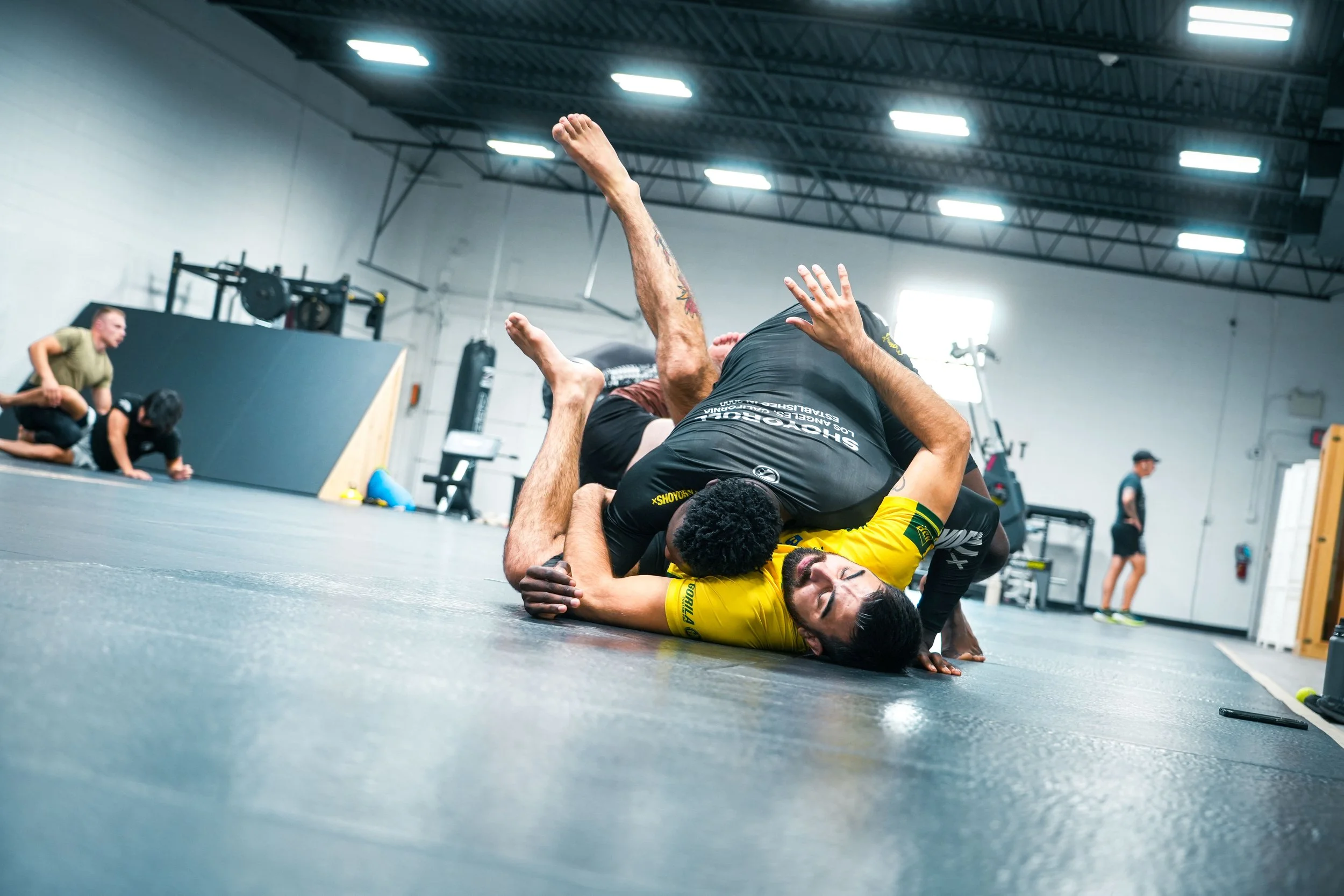
BJJ vs. MMA: What’s the Difference and Which One Should You Train?
Brazilian Jiu-Jitsu is an important part of MMA, but the two are not the same. Here is what beginners should know before deciding where and how they want to train.
For a lot of people, the first time they really notice Brazilian Jiu-Jitsu is while watching a UFC fight.
One fighter takes the other to the ground. They begin fighting for position. The commentators start talking about hooks, guard passes, underhooks, back control, or submission attempts.
A few seconds later, someone locks in a choke or attacks an arm, and the fight is over.
It is easy to watch that and assume Brazilian Jiu-Jitsu and mixed martial arts are basically the same thing.
They are closely connected, but they are not the same sport.
Brazilian Jiu-Jitsu is a grappling-based martial art. MMA combines grappling with striking and other combat disciplines.
You can train Brazilian Jiu-Jitsu for years without practicing punches or kicks, stepping into a cage, or becoming an MMA fighter.
At the same time, BJJ is an essential part of MMA. Professional and amateur fighters frequently spend a significant amount of time developing their grappling because they need to understand takedowns, positional control, escapes, and submissions.
Here is what separates BJJ from MMA and how to decide which type of training may be the better fit for you.
What Is Brazilian Jiu-Jitsu?
Brazilian Jiu-Jitsu, commonly shortened to BJJ, is a martial art centered around grappling.
Students learn how to control another person using positioning, timing, leverage, pressure, and technique. Training can include:
Takedowns
Guard work
Positional control
Escapes
Sweeps
Pins
Chokes
Joint locks
Most exchanges eventually move to the ground, although students also learn how to begin from standing and transition safely into different positions.
There are no intentional punches or kicks in a standard Brazilian Jiu-Jitsu class.
Instead, students work to improve their position, control their partner, or apply a submission. When someone is caught in a submission, they tap their partner or the mat to signal that the technique should be released.
That creates a training environment where students can practice techniques against real resistance while still taking care of one another.
Brazilian Jiu-Jitsu is generally practiced in two formats.
Gi Jiu-Jitsu
In gi classes, students wear a traditional jacket and pants. The uniform can be gripped and used to control movement, establish positions, or set up techniques.
No-Gi Jiu-Jitsu
In no-gi classes, students typically wear a rashguard and grappling shorts. Without the fabric grips of the gi, the style often relies more heavily on body positioning, movement, and direct control of the opponent.
Both styles teach grappling. Many students eventually train in both.
What Is MMA?
MMA stands for mixed martial arts.
As the name suggests, it combines techniques and strategies from several combat sports. Depending on the fighter and training program, those disciplines may include:
Brazilian Jiu-Jitsu
Wrestling
Boxing
Muay Thai
Kickboxing
Judo
Karate
Other striking and grappling systems
An MMA athlete needs to understand much more than one isolated area of fighting.
They must learn how to strike while standing, defend and complete takedowns, control someone on the ground, escape bad positions, defend submissions, and move smoothly between each phase.
That transition between striking and grappling is a major part of what makes MMA its own sport.
A position that works well in a BJJ match may need to be adjusted when punches are involved. A stance that is effective for boxing may leave someone vulnerable to a takedown. An MMA fighter must constantly account for several different types of threats and opportunities.
That makes MMA a broad and demanding sport.
Brazilian Jiu-Jitsu has a narrower focus, but students can spend a lifetime exploring the depth of that focus.
Is Brazilian Jiu-Jitsu Part of MMA?
Yes.
Brazilian Jiu-Jitsu has been connected to modern MMA since the earliest days of the UFC. Its techniques remain important because MMA fights regularly involve clinching, takedowns, ground control, escapes, and submissions.
An MMA fighter may not consider themselves a BJJ specialist, but they still need to understand grappling.
They need to know what to do when someone attempts to take them down. They need to recognize submissions. They need to escape from underneath an opponent, maintain control from the top, and understand when a position is dangerous.
At the same time, Brazilian Jiu-Jitsu has grown into a major competitive sport of its own.
BJJ athletes compete in gi and no-gi tournaments where striking is not permitted. Professional submission-grappling events have also become increasingly visible, allowing elite jiu-jitsu athletes to build careers without transitioning into MMA.
Someone can become a serious, highly accomplished jiu-jitsu athlete without ever becoming an MMA fighter.
Will You Get Punched in a BJJ Class?
No.
Standard Brazilian Jiu-Jitsu classes do not include intentional punching or kicking.
BJJ is still a contact sport. You will work closely with other people, experience pressure, fight for position, and practice techniques against resistance. You may occasionally get bumped or experience the normal discomfort that comes with learning a grappling art.
But your partner should not be intentionally hitting you.
This is one of the biggest reasons BJJ appeals to people who are interested in combat sports but are not interested in striking.
You can learn takedowns, escapes, positional control, chokes, and joint locks without training to absorb punches.
For many students, that makes BJJ a more comfortable entry point into martial arts.
Does BJJ Training Feel Like a UFC Fight?
Not really.
A normal Brazilian Jiu-Jitsu class is much more structured than what you see during a professional MMA fight.
A class will typically include some combination of:
Movement or warm-up exercises
Technical instruction
Partner drilling
Positional training
Live grappling rounds
The instructor introduces a position or technique, explains the important details, and gives students time to practice with a partner.
During live rounds, both students attempt to use their techniques against resistance. The pace can vary depending on experience, size, goals, and the purpose of the round.
The goal, however, is still to learn.
Your training partner is not your enemy. You are both trying to improve while helping each other leave class healthy enough to come back.
Nobody is expecting a first-day student to perform like a professional athlete. Most beginners are simply trying to remember where their hands and feet are supposed to go.
Do You Have to Be a Fighter to Train BJJ?
Not at all.
Most Brazilian Jiu-Jitsu students are not professional fighters.
They are working adults, parents, college students, business owners, former athletes, first responders, and people looking for a physical activity that keeps their attention.
Some students want to compete in BJJ tournaments. Some are interested in MMA. Others have no interest in competition at all.
They train because they enjoy learning, exercising, solving problems, and becoming part of a community.
You do not need to arrive with a fighter’s mentality.
You also do not need to be naturally aggressive or unusually tough.
Many successful jiu-jitsu students are thoughtful, quiet, analytical, cautious, or completely unfamiliar with combat sports when they begin.
The willingness to learn consistently matters much more than looking intimidating.
Is BJJ Easier Than MMA?
Not necessarily.
They are difficult in different ways.
MMA requires athletes to develop skills across multiple disciplines. A fighter must learn striking, wrestling, grappling, defense, conditioning, and the ability to connect all of those areas together.
Brazilian Jiu-Jitsu has a more specific focus, but the amount of detail within grappling is enormous.
A student can spend years studying one position and continue discovering new grips, reactions, attacks, escapes, and transitions.
Even without striking, there are countless decisions being made during a grappling exchange.
For beginners, BJJ can sometimes feel more approachable because there are fewer immediate variables. You can focus on learning how to move, maintain position, control your breathing, and understand basic techniques without simultaneously worrying about punches and kicks.
That does not make the training easy. It simply gives you a more focused place to begin.
Is No-Gi BJJ the Same as MMA Grappling?
No-gi BJJ often looks similar to the grappling seen in MMA, but the two are still different.
Many of the same takedowns, chokes, control positions, and submission techniques can appear in both sports.
The rules, however, affect the strategy.
In no-gi BJJ, students do not have to account for strikes. This allows them to use certain positions and approaches that an MMA fighter might avoid or modify.
An MMA fighter may prioritize:
Getting back to their feet
Controlling someone against the cage
Preventing strikes from the bottom
Maintaining a position that allows ground-and-pound
Avoiding positions that expose their head
A no-gi BJJ athlete may spend more time developing guard attacks, pursuing submissions, or working through positions that make sense within a grappling-only rule set.
There is significant overlap, but the goals are not identical.
Why Do MMA Fighters Train Brazilian Jiu-Jitsu?
MMA fighters train BJJ because grappling is a major part of their sport.
A fighter may come into a jiu-jitsu room to improve a specific area of their game, such as:
Takedown defense
Guard passing
Submission defense
Back escapes
Top control
Chokes
Leg locks
Scrambles
Getting back to the feet
Even experienced fighters benefit from spending time with dedicated grapplers.
A Brazilian Jiu-Jitsu academy gives them the opportunity to work with athletes who specialize in ground movement, positional detail, and submissions.
At Movement Art, MMA fighters regularly come through the gym to sharpen their BJJ.
Some are preparing for an upcoming fight. Others are working on particular positions or adding new tools to their overall grappling game.
Their presence raises the level in the room and gives experienced students opportunities to train with high-level athletes.
It does not mean that every class is designed around professional fighting.
The same academy can help an MMA fighter improve their submission defense while also teaching a brand-new student how to move through the basic positions for the first time.
Do You Have to Compete?
No.
Competition is available in both BJJ and MMA, but training does not automatically mean you have to compete.
Brazilian Jiu-Jitsu offers tournaments for students who want to challenge themselves against athletes from other academies. These events may include gi divisions, no-gi divisions, different belt levels, age groups, and weight classes.
Plenty of students never enter a tournament.
They train because they enjoy the classes and want to continue improving.
MMA training can also be practiced without accepting an amateur or professional fight. However, someone considering an MMA program should understand that striking and the combination of striking and grappling are central parts of the sport.
Before joining any martial arts program, it helps to be honest about what you are looking for.
A good coach should be able to explain what the classes involve and whether they match your goals.
Which One Is Better for Fitness?
Both BJJ and MMA can provide demanding workouts.
Brazilian Jiu-Jitsu challenges the entire body. Students grip, pull, push, stabilize, move their hips, carry weight, maintain posture, and work through resistance while controlling their breathing.
MMA training may add pad work, striking combinations, footwork, defensive movement, and rapid transitions between standing and ground positions.
The better choice is usually the activity you enjoy enough to continue.
A class can burn a tremendous number of calories, but that does not matter much if you dread attending and quit after a few weeks.
The most effective training routine is generally one that:
Holds your attention
Fits your schedule
Gives you a reason to keep learning
Allows you to progress over time
Makes you want to return
For many people, BJJ succeeds as a fitness activity because it does not feel like repeating the same workout over and over.
Every class introduces new problems to solve.
How Should a Beginner Choose Between BJJ and MMA?
The right choice depends on what actually interests you.
BJJ May Be the Better Fit If:
You are primarily interested in grappling
You do not want to practice striking
You like technical learning and problem-solving
You want to focus deeply on one martial art
You want the option to compete in grappling
You are looking for a new hobby or community
You want a physical activity that stays mentally engaging
MMA May Be the Better Fit If:
You specifically want to learn striking and grappling
You want to understand every phase of an MMA fight
You are comfortable practicing controlled strikes
You are interested in amateur or professional MMA competition
You enjoy combining several martial arts into one sport
You do not have to make a permanent decision before taking your first class.
Some people begin with Brazilian Jiu-Jitsu and later add boxing or Muay Thai. Others arrive with a striking background and discover that they prefer grappling.
Some continue cross-training. Others decide to specialize.
Taking a class will usually teach you more about what you enjoy than watching another month of videos online.
Can UFC Fans Enjoy BJJ Without Wanting to Fight?
Absolutely.
Watching MMA is one of the most common ways people discover Brazilian Jiu-Jitsu.
At first, you may simply want to understand what is happening when a fight reaches the ground.
After training for a while, you begin noticing details that were invisible before.
You recognize when a fighter is attempting to pass the guard. You understand why an underhook matters. You can see a back take developing or recognize when someone is beginning to set up a submission.
Training BJJ can deepen your appreciation of MMA without requiring you to become an MMA fighter.
You can enjoy basketball without trying to reach the NBA. You can enjoy racing without becoming a professional driver.
You can train Brazilian Jiu-Jitsu without ever preparing for a cage fight.
The professional version may introduce you to grappling. Your own reason for training can be completely different.
BJJ and MMA at Movement Art
Movement Art is a Brazilian Jiu-Jitsu academy, not a general MMA gym.
Our focus is teaching gi and no-gi jiu-jitsu through structured instruction, technical drilling, positional practice, and live grappling.
Movement Art owners Nick Salles and Danny Maira are black belts under UFC BJJ champion and multiple-time world champion Mikey Musumeci. UFC welterweight Sean Brady has also trained at Movement Art.
MMA fighters regularly come through the academy to sharpen their Brazilian Jiu-Jitsu.
They may be preparing for a fight, improving a particular position, working on submission defense, or expanding their overall grappling game.
That creates a room where serious competitors and experienced athletes can receive high-level training.
It does not mean beginners are expected to train like professional fighters.
A strong academy should be able to challenge experienced competitors while still giving a first-day student the attention and structure they need.
Most Movement Art students are not professional athletes. They are working adults, parents, hobbyists, former athletes, and beginners who want to learn Brazilian Jiu-Jitsu.
You can benefit from training in a high-level environment without having high-level competitive goals.
The person preparing for a professional fight and the person learning their first guard pass may have very different objectives, but both can benefit from thoughtful coaching and strong training partners.
Try Brazilian Jiu-Jitsu in Warminster
If grappling is your favorite part of MMA—or you are curious about martial arts but do not want to train striking—Brazilian Jiu-Jitsu may be the right place to start.
You do not need to be a fighter.
You do not need a wrestling background.
You do not need to arrive in exceptional physical condition.
You can come in, learn the basic positions, and see whether you enjoy the process of solving problems on the mat.
At Movement Art Jiu-Jitsu in Warminster, beginners train in the same academy as experienced competitors and visiting professional athletes, but everyone starts by learning the fundamentals.
Schedule a free introductory class and experience the difference between watching grappling and actually learning it.
Frequently Asked Questions
Is BJJ the same thing as MMA?
No. Brazilian Jiu-Jitsu is a grappling-based martial art. MMA is a sport that combines grappling with striking disciplines such as boxing, kickboxing, and Muay Thai.
Does Brazilian Jiu-Jitsu include punches?
Standard Brazilian Jiu-Jitsu classes do not include intentional punches or kicks. Students practice takedowns, positional control, escapes, sweeps, chokes, and joint locks.
Can you train BJJ without becoming an MMA fighter?
Yes. Most BJJ students do not become MMA fighters. People train recreationally, for fitness, to compete in grappling tournaments, or because they enjoy learning the art.
Is BJJ useful for MMA fighters?
Yes. Brazilian Jiu-Jitsu teaches ground control, submissions, escapes, positional awareness, and other skills that are important in MMA.
Why do MMA fighters train at BJJ gyms?
MMA fighters may visit BJJ academies to improve their grappling, work with skilled training partners, prepare for an opponent, or sharpen specific positions before a fight.
Is no-gi BJJ the same as MMA?
No. No-gi BJJ does not include intentional striking. Although many techniques transfer between the sports, the rules and strategies are different.
Is BJJ good for UFC fans?
BJJ can help UFC fans better understand the grappling exchanges they see during MMA fights. It also allows them to participate in grappling without training for an MMA fight.
Do I need wrestling experience to start BJJ?
No. Beginners can start without previous wrestling or martial arts experience.
Do I need to compete?
No. Competition is optional. Many people train BJJ for fitness, personal development, community, or the enjoyment of learning.
Can I try BJJ before signing up?
Yes. Movement Art offers a free introductory class for local residents interested in trying Brazilian Jiu-Jitsu.
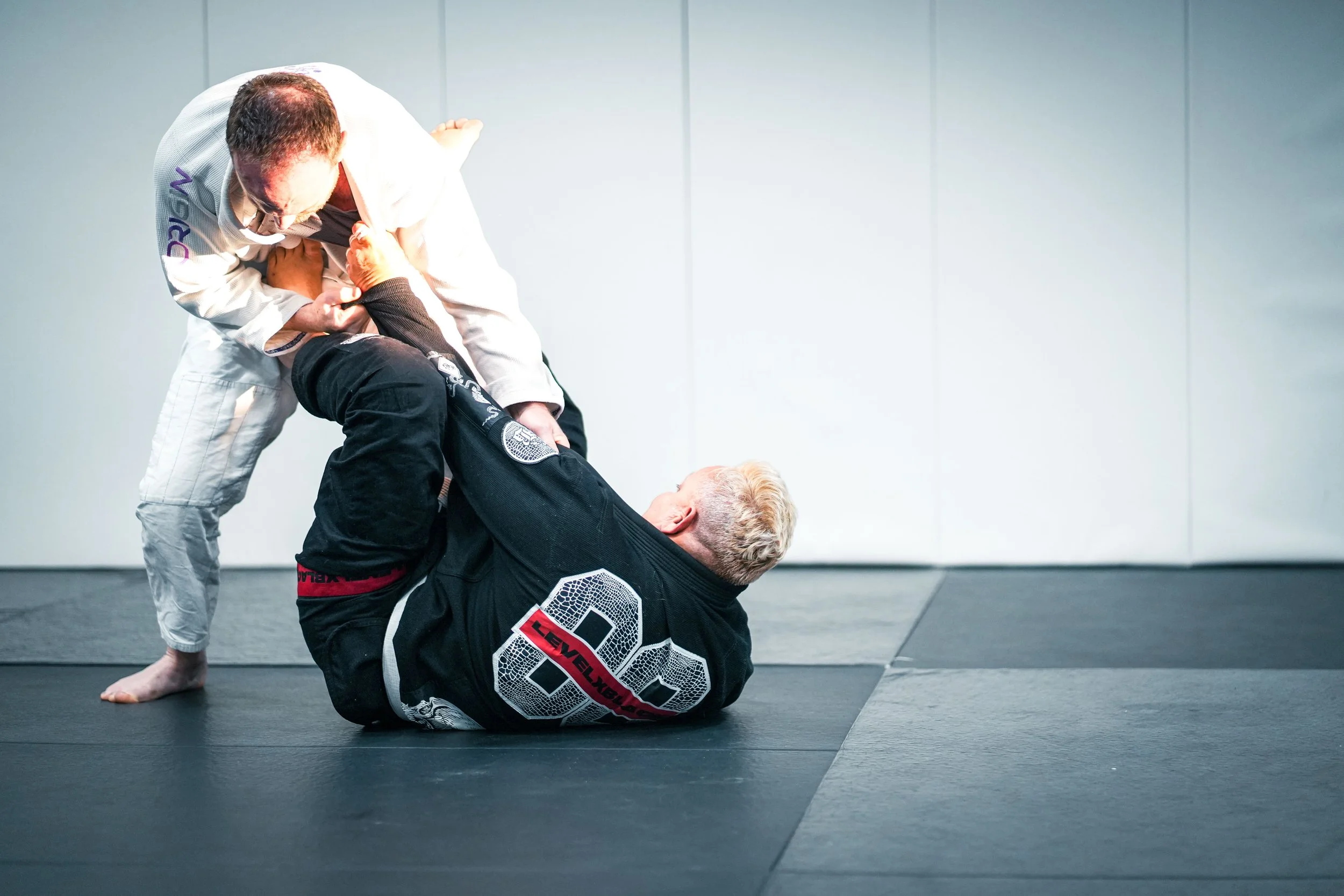
Can You Start Brazilian Jiu-Jitsu at 40? What New Students Should Know
Yes, you can start Brazilian Jiu-Jitsu at 40—but you may need to approach it differently than you would have at 20. Here is what new adult students should realistically expect.
Maybe you have been thinking about trying Brazilian Jiu-Jitsu for a few months.
Maybe it has been a few years.
You watch a video, pass a gym on your way home, or hear a friend talk about training. It looks interesting. It also looks like something you probably should have started when you were younger.
Then the questions begin.
Am I too old? Do I need to get in shape first? What if everyone else in class is 22? Is my body going to be able to handle it? What happens when I have no idea what I am doing?
Here is the honest answer:
Yes, you can start Brazilian Jiu-Jitsu at 40.
Plenty of people begin in their late 30s, 40s, 50s, or beyond. Starting later does not mean pretending your body is still 20 years old, however. It means learning how to train intelligently, communicating with your coaches and partners, and allowing yourself to be a beginner.
That last part is often the hardest.
Is 40 Too Old to Start Brazilian Jiu-Jitsu?
No, but it is old enough to know that reckless decisions usually have consequences.
That can actually work in your favor.
A 20-year-old beginner may try to solve every problem by moving faster, squeezing harder, or refusing to give up a bad position. An older beginner is often more willing to slow down, listen, and look for a technical solution.
That is exactly what Brazilian Jiu-Jitsu is built around.
Jiu-jitsu uses positioning, leverage, timing, and control to solve physical problems. Strength and athleticism certainly help, but they are not substitutes for understanding what to do.
You will still train with people who are younger, faster, stronger, or more experienced than you. The goal is not to prove that age does not matter. The goal is to learn how to work with the body you have and steadily become more capable.
Do You Need to Get in Shape Before Starting BJJ?
This may be the most common reason adults delay their first class.
They decide they will start after losing 15 pounds, improving their cardio, becoming more flexible, or getting back into a regular gym routine.
Six months later, they are often still waiting.
You do not need to be in great shape before starting Brazilian Jiu-Jitsu. Your first few classes are not a fitness test, and no reasonable instructor expects a new student to keep pace with someone who has been training for years.
You may get tired quickly. That is normal.
Jiu-jitsu asks you to move in unfamiliar ways while thinking through unfamiliar situations. Even people who run, lift weights, or play other sports can be surprised by how tiring their first classes feel.
The conditioning required for jiu-jitsu develops partly by doing jiu-jitsu.
You can certainly support your training with walking, strength training, mobility work, or other forms of exercise. But you do not need to complete a separate fitness program before earning the right to walk into a beginner class.
Start where you are.
What If You Have Never Done a Martial Art?
That is completely normal.
Most adult beginners do not arrive with a background in wrestling, judo, or another martial art. Many have not participated in an organized sport since high school—or ever.
A beginner-friendly class should not assume that you already know how to grapple.
You will learn basic movements, positions, and concepts step by step. At first, even simple instructions may feel confusing. Someone may tell you to “shrimp,” “frame,” “pass the guard,” or “take the back,” and you may have no idea what any of that means.
Nobody is born knowing jiu-jitsu vocabulary.
The experienced students in the room once had the same confused expression during their first class. Being new is not an inconvenience to the gym. New students are how every gym community continues to grow.
Is Brazilian Jiu-Jitsu Hard on the Body?
Brazilian Jiu-Jitsu is a contact sport, so it is reasonable to think about injury risk before beginning.
You will be moving on the ground, carrying body weight, gripping, pushing, pulling, and working against resistance. Soreness—especially during your first few weeks—is common.
That does not mean every class should leave you feeling destroyed.
How you approach training makes a major difference. Adults starting at 40 should be especially willing to:
Tell the coach about previous injuries or physical limitations
Choose controlled and trustworthy training partners
Tap before a joint is placed under unnecessary pressure
Take breaks when needed
Avoid turning routine practice into a competition
Give the body time to recover between classes
Ask questions when a movement does not feel right
There is no award for being the toughest new person in the room.
In jiu-jitsu, tapping is how you safely acknowledge that your partner has established a submission. It is not a failure, and it does not mean you are weak. Everyone taps—from first-day students to experienced black belts.
Learning to tap early may be one of the best habits an adult beginner can develop.
Anyone with an existing injury, cardiovascular concern, or other medical condition should speak with an appropriate healthcare professional before beginning a new contact sport.
Will Everyone in Class Be Younger Than You?
Probably not.
Most adult jiu-jitsu gyms include a wide range of ages, careers, body types, fitness levels, and experience levels. You may train alongside college students, parents, first responders, business owners, former athletes, and people who started for the same reasons you did.
Even when you work with a younger partner, you are not required to match their pace or intensity.
A healthy training environment allows partners to communicate before they begin. It is perfectly reasonable to tell someone:
“I’m new, and I’m trying to keep the pace controlled.”
A good partner will respect that.
You should also be matched thoughtfully during your early classes. Size, experience, temperament, and training goals all matter—not just age.
What If You Feel Awkward or Out of Place?
You probably will, at least briefly.
Walking into an established gym can feel like arriving late to a party where everyone already knows one another. People have their preferred training partners, inside jokes, and routines. They know where to put their shoes and what the coach means when class begins.
You do not.
That feeling usually passes faster than people expect.
Jiu-jitsu gives you an easy way to connect because you are immediately learning and working with other people. You do not need to be unusually outgoing or introduce yourself to everyone in the building. You begin by meeting one coach and one training partner.
Then you come back.
After a few classes, the room starts to feel familiar. You recognize names. You understand the basic rhythm of class. Eventually, another new person walks through the door looking just as uncertain as you once did.
Should You Start With Gi or No-Gi Jiu-Jitsu?
You can begin with either.
Gi jiu-jitsu is practiced in a traditional jacket and pants. The uniform provides grips that can be used to control movement and position.
No-gi jiu-jitsu is generally practiced in a rashguard and grappling shorts. Because there is less fabric to grip, the pace can sometimes feel faster and more movement-oriented.
Neither version is exclusively for younger or more athletic students.
For most beginners, the best class is the one they can attend consistently and feel comfortable returning to. Many students eventually train in both styles.
Movement Art offers adult gi, no-gi, and fundamentals classes, giving new students the opportunity to experience different approaches to training.
How Often Should You Train When Starting at 40?
You do not need to train every day.
For many new adult students, two classes per week is a realistic starting point. That provides enough repetition to begin learning while still giving the body time to adjust.
After a few weeks, you can decide whether adding another class makes sense.
The fastest possible schedule is not always the best schedule. A routine you can maintain around work, family, sleep, and recovery will take you much further than an overly ambitious plan that leaves you exhausted after two weeks.
Consistency beats intensity.
Starting with fewer classes can also help you distinguish normal post-workout soreness from discomfort that deserves attention.
Do You Have to Compete?
No.
Some adults begin jiu-jitsu because they are excited by the idea of competing. Others have absolutely no interest in entering a tournament.
Both are welcome.
You can train because you want an engaging workout. You can train to learn a new skill, manage stress, meet people, challenge yourself, or spend a few hours each week focused on something other than work and responsibilities.
Competition is one possible part of jiu-jitsu. It is not the price of admission.
You also do not have to prove yourself during regular classes. Your training partners are there to learn with you, not to determine whether you belong.
What Advantages Do Older Beginners Have?
Starting later comes with limitations, but it can also come with useful advantages.
You May Be More Patient
Adults tend to understand that difficult skills take time. You may be less likely to quit simply because you are not immediately good at something.
You May Be More Coachable
You have probably spent years receiving feedback at work, raising a family, learning professional skills, or navigating difficult situations. You understand how to listen, make an adjustment, and try again.
You May Have Clearer Reasons for Training
At 40, you are less likely to begin because everyone else is doing it. You may be looking for a sustainable activity, a new community, a mental challenge, or something that makes you feel physically capable again.
Knowing why you walked through the door can help you stay consistent when progress feels slow.
You May Care Less About Impressing People
This advantage does not apply to everyone, but age can make it easier to leave the ego at the door.
You do not need to “win” every practice round. You need to learn something, help your partner learn something, and leave healthy enough to return.
That is a far better foundation for long-term training.
What Should You Expect During Your First Month?
Your first month will probably feel like a mixture of progress and confusion.
During one class, a technique may finally make sense. During the next, you may feel as though you have forgotten everything.
That is normal.
In the beginning, success may look like:
Remembering one position from the previous class
Breathing instead of panicking
Recognizing when you are in danger
Asking a useful question
Moving with slightly more control
Making it through class without exhausting yourself immediately
Feeling comfortable enough to introduce yourself to another student
You do not need to measure early progress by how many people you can submit. In fact, that is one of the least useful ways for a new student to evaluate improvement.
Pay attention to what is becoming more familiar.
How Do You Find the Right Gym?
The environment matters at any age, but it becomes especially important when you are starting as an adult.
Look for a gym where beginners receive real instruction rather than being expected to figure everything out during live sparring.
A good beginner environment should include:
Coaches who explain techniques clearly
Training partners who can control their intensity
A culture where tapping is respected
Clean and well-maintained training areas
Classes that fit your actual schedule
Students with different ages and experience levels
A clear path for learning the fundamentals
Pay attention to how you feel during your visit.
Are questions welcomed? Does the coach ask about your experience and any physical limitations? Are experienced students helpful to new people? Does the class feel structured?
High-level instruction matters. So does feeling comfortable enough to return for a second class.
Starting BJJ at 40 in Warminster
You are not too old to begin Brazilian Jiu-Jitsu.
You may need to warm up more carefully than you did at 20. You may need additional recovery time. You should probably resist the urge to keep up with the most energetic person in the room.
None of that prevents you from learning.
At Movement Art Jiu-Jitsu in Warminster, our adult program welcomes students with different ages, backgrounds, fitness levels, and goals. Our fundamentals classes are designed to introduce new students to the core positions and principles of jiu-jitsu in a structured environment.
You do not need martial arts experience. You do not need to be in peak condition. You do not need to decide whether you want to compete.
You only need to be willing to try something new.
Schedule a free introductory class at Movement Art and see what training feels like for yourself. No commitment and no expectation that you already know what you are doing.
Frequently Asked Questions
Can a 40-year-old beginner learn Brazilian Jiu-Jitsu?
Yes. Adults can begin Brazilian Jiu-Jitsu in their 40s and beyond. A beginner should train at an appropriate pace, communicate with coaches and partners, and allow adequate time for recovery.
Am I too out of shape to start BJJ?
You do not need to reach a particular fitness level before beginning. A beginner-friendly class allows you to work at your current level while gradually improving your conditioning.
How many times per week should a 40-year-old beginner train?
Two classes per week is a manageable starting point for many adults. Training frequency can gradually increase as the body adjusts and the student develops a sustainable routine.
Is gi or no-gi better for older beginners?
Both can work for older beginners. The quality of instruction, the training environment, and your ability to attend consistently matter more than choosing one style based on age.
Do I have to spar during my first BJJ class?
Class structure varies, but new students should not feel pressured into training at an intensity they are uncomfortable with. Ask the instructor what the first class includes and communicate that you are new.
What should I wear to my first class?
For a first class, comfortable athletic clothing such as a fitted T-shirt and shorts without zippers or pockets is generally appropriate. The academy can explain what equipment you will need if you continue with gi or no-gi training.
Can I try a class before purchasing a membership?
Yes. Local residents can schedule a free introductory class at Movement Art before deciding whether to enroll.
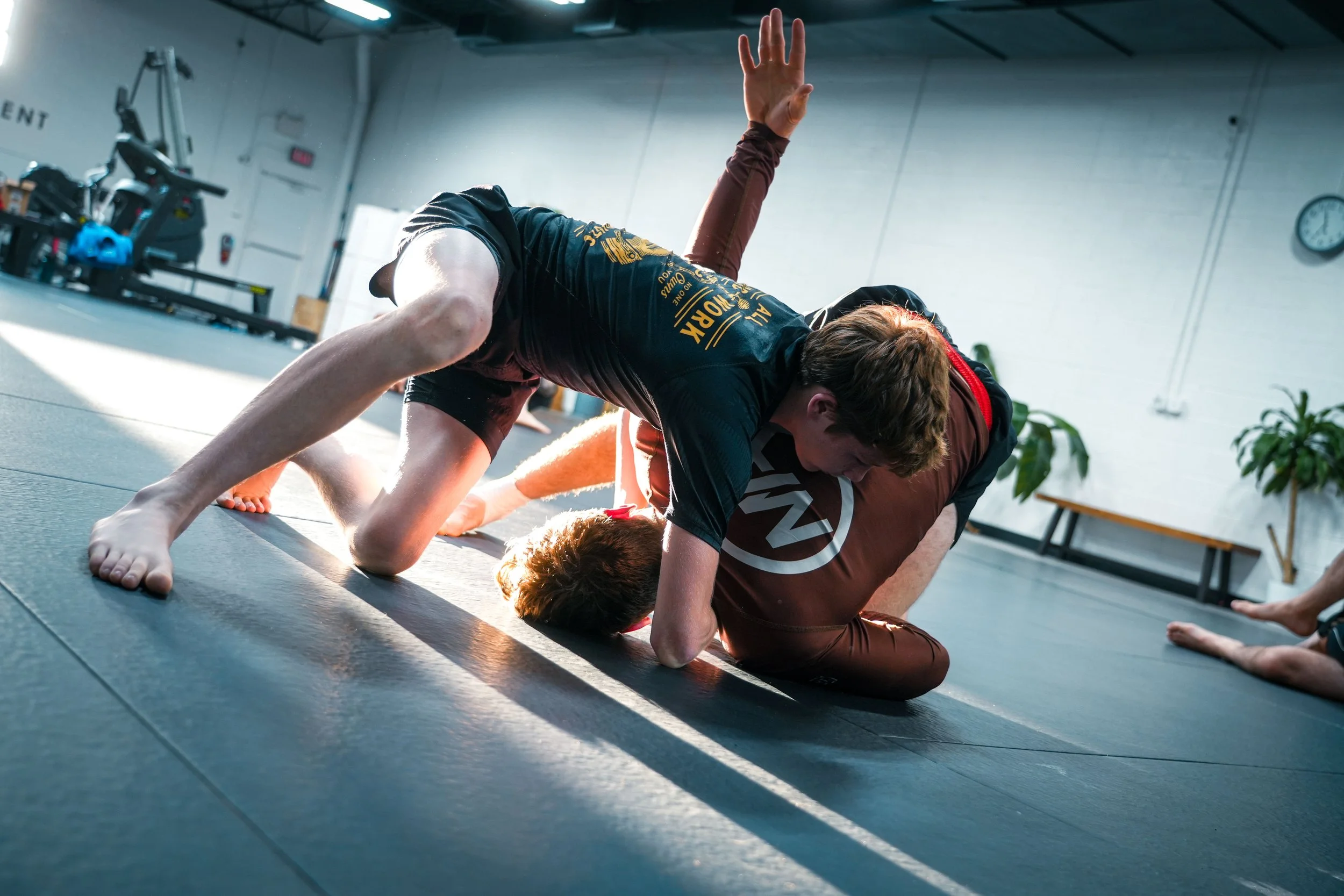
Is Jiu-Jitsu the Right After-School Activity for Your Child? A Bucks County Parent’s Guide
Soccer, dance, martial arts, music lessons, parents have plenty of choices when it comes to after-school activities. Here is how to decide whether Brazilian Jiu-Jitsu might be the right fit for your child.
Choosing an after-school activity sounds simple until you actually have to do it.
You want your child to be active, but you also want the activity to hold their attention. You want them to have fun, but hopefully learn something along the way. It needs to fit your schedule, feel safe, and—ideally—not become something you have to argue about every time it is time to leave the house.
There is no single activity that is right for every child. Soccer may be perfect for one kid and miserable for another. Some children love performing on a stage, while others would rather solve a problem, build something, or compete one-on-one.
Brazilian Jiu-Jitsu offers a different option.
It gives children a place to move, think, interact with others, and work through challenges in a structured environment. For families looking at after-school activities in Warminster and the surrounding Bucks County area, it may be worth putting on the list—even if no one in the family has any martial arts experience.
What Do Kids Actually Do in a Jiu-Jitsu Class?
When parents hear “martial arts,” they sometimes picture children punching boards, throwing kicks, or being placed into intense sparring sessions.
Brazilian Jiu-Jitsu looks different.
Jiu-jitsu is primarily a grappling art. Children learn how to move their bodies, maintain balance, control positions, escape safely, and use technique rather than relying only on strength. A typical class may include a warm-up, movement exercises, instruction, partner drills, games, and controlled practice.
For younger students, much of the learning is built into activities that keep them moving and engaged. Older children can begin working through techniques and positions in greater detail while still learning in an age-appropriate environment.
The goal is not to turn every child into a serious competitor. It is to help them become more comfortable with movement, challenge, teamwork, and gradual improvement.
Is Jiu-Jitsu Safe for Children?
This is usually one of the first questions a parent asks—and it should be.
No sport or physical activity is completely risk-free. Children can get bumped, fall down, or experience the occasional minor injury in jiu-jitsu, just as they can in soccer, basketball, gymnastics, or recreational play.
The quality of the program matters.
A well-run kids’ jiu-jitsu class should emphasize control, communication, proper partner matching, close supervision, and the importance of stopping immediately when a partner taps. Children should be taught that taking care of their training partners is part of learning the art.
Parents considering a program should feel comfortable asking:
How are children grouped by age and size?
How much live training is included?
How do instructors handle overly aggressive behavior?
What safety rules are taught to beginners?
Can parents observe a class before enrolling?
A good academy will welcome those questions rather than brush them aside.
Does My Child Need to Be Athletic?
Not at all.
Some children walk into their first class already comfortable with sports. Others may not consider themselves athletic and may have struggled to connect with traditional team activities.
Jiu-jitsu can work well for both.
A naturally athletic child will still be challenged to slow down, think, and use technique. A child who is less confident physically can improve at their own pace without needing to score goals, catch a ball, or perform in front of a crowd.
Progress is often personal and easy to recognize. A child may learn how to complete a new movement, escape a difficult position, remain calm during a drill, or simply participate more confidently than they did the week before.
Those may look like small victories from the outside. To the child earning them, they can feel enormous.
What About Shy or High-Energy Children?
Parents often wonder whether their child’s personality will fit the room.
The encouraging answer is that jiu-jitsu does not require one particular personality type.
A shy child is not expected to become the loudest person in class. They can build relationships through shared drills and gradually become more comfortable participating.
A high-energy child gets an appropriate place to move, but also learns that movement has to be controlled. Listening, waiting for instructions, respecting a partner, and knowing when to slow down are all part of training.
Jiu-jitsu does not instantly change a child’s personality—and it should not try to. A good program gives children a structure in which they can become more capable and confident versions of themselves.
What Can Children Learn Beyond Jiu-Jitsu Techniques?
Parents may first enroll their children because they want them to be active or learn practical skills. Over time, however, many of the most valuable lessons have little to do with a particular takedown or escape.
How to Be Coached
Children receive instructions, try something unfamiliar, make mistakes, and receive feedback. They begin learning that correction is not punishment. It is part of getting better.
How to Handle Frustration
Not every technique works on the first attempt. Sometimes a training partner understands the movement more quickly. Children learn to pause, listen, adjust, and try again instead of immediately giving up.
How to Work With Different People
Training requires cooperation. Even when two students are practicing against one another, they are still responsible for helping each other learn safely.
How to Make Progress Without Immediate Rewards
Jiu-jitsu is a long-term skill. Improvement comes through repetition and consistency, not instant results. That can be a valuable lesson in a world where children are used to receiving entertainment and feedback almost immediately.
None of this happens overnight. But class by class, children get opportunities to practice these habits in a real setting.
Is Jiu-Jitsu Only for Children Who Want to Compete?
Competition is available for children who are interested, but it does not have to be the goal.
Some students enjoy preparing for tournaments and testing themselves against children from other academies. Others simply enjoy learning, exercising, seeing their friends, and working toward the next skill or belt.
Both are legitimate reasons to train.
Parents should look for a program that can encourage ambitious students without making every child feel pressured to compete. A child can take jiu-jitsu seriously, make meaningful progress, and receive the full benefit of training without ever entering a tournament.
Can It Realistically Fit Into a Family’s Schedule?
An activity is only valuable when a family can attend consistently without turning every week into a logistical crisis.
Movement Art offers age-specific children’s classes during weekday afternoon and early-evening hours. The program currently includes Movement for Jiu-Jitsu classes for ages 4–6 and kids’ classes for ages 7–13.
That gives families the ability to choose a schedule that fits around school, homework, dinner, and other commitments.
There is no need to overload a child’s calendar immediately. It is often better to begin with a realistic routine the family can maintain. Once the child becomes comfortable and looks forward to training, adding another class can be considered.
Consistency matters more than trying to do everything at once.
How Can You Tell Whether a Program Is the Right Fit?
Websites and social media can tell you something about an academy, but seeing a class in person will tell you much more.
Pay attention to how the instructors speak to the children. Are they able to maintain structure without constantly yelling? Do they know the students’ names? Are the children engaged? Is the room clean and organized? Do experienced students take care of beginners?
Most importantly, watch your child.
They may feel nervous before the first class. That is normal. The better question is how they feel afterward. Did they participate? Did something make them smile? Are they curious about trying again?
You do not need to make a long-term decision based on a description online. Let your child experience the environment and see how they respond.
Try a Kids’ Jiu-Jitsu Class in Warminster
Brazilian Jiu-Jitsu is not the perfect after-school activity for every child. No activity is.
But for children who enjoy movement, problem-solving, learning practical skills, and being part of a team, it can become much more than another item on the weekly calendar.
At Movement Art Jiu-Jitsu in Warminster, our kids’ program gives children a structured and welcoming place to learn at their own pace. Beginners are welcome, and no previous martial arts experience is necessary.
The best way to decide whether it is right for your child is to let them try it.
Schedule a free introductory class and come meet our instructors. There is no commitment—just an opportunity for your child to step onto the mat and see what they think.
Frequently Asked Questions
What age can children start jiu-jitsu at Movement Art?
Movement Art offers a Movement for Jiu-Jitsu program for children ages 4–6 and kids’ classes for students ages 7–13.
Does my child need previous martial arts experience?
No. Beginners can start without any previous jiu-jitsu or martial arts training. Classes are designed to help children learn progressively rather than expecting them to understand everything immediately.
Is Brazilian Jiu-Jitsu the same as karate?
No. Karate generally places more emphasis on striking techniques such as punches and kicks. Brazilian Jiu-Jitsu is primarily a grappling art based on movement, control, positioning, escapes, and submissions.
Does my child have to compete?
No. Competition is optional. Children can train for fitness, confidence, enjoyment, personal development, and skill-building without participating in tournaments.
Can my child try a class before we enroll?
Yes. Movement Art offers a free introductory class so children and parents can experience the program before making a commitment.

Why BJJ Community Events Matter: How Movement Art Builds More Than a Gym
From open mats to seminars, community events are what make a jiu-jitsu academy more than a gym. Here’s how Movement Art uses them to build connection and culture.
A Strong Gym Is Built on More Than Just Good Technique
At Movement Art, we take pride in offering world-class instruction, structured classes, and a clean, professional facility. But what truly sets us apart isn’t found in the technique library or mat schedule.
It’s found in the way our members show up for each other off the mats.
From weekend open mats and charity rolls to tournaments, seminars, and hangouts, community events are a core part of our culture and one of the biggest reasons students stick around.
Why Community Events Make a Difference
1. They Build Real Relationships
When you train with someone, you get to know them fast. But when you sit next to them at a BBQ, carpool to a comp, or cheer them on at a local tournament, it builds a different kind of connection.
That kind of camaraderie leads to:
More consistency in training
More motivation to improve
More trust in your training partners
2. They Help Beginners Feel Welcome
Walking into a jiu-jitsu gym for the first time can be intimidating. Events like open mats, intro nights, or social meetups break down barriers and help new members integrate faster.
That’s one of the reasons we host and promote beginner-friendly gatherings—so every student knows they’re part of something from day one.
3. They Remind Us It’s Supposed to Be Fun
Training hard is important. But so is enjoying the ride. Community events bring a sense of celebration, creativity, and joy to what we do. Whether it’s a holiday open mat, belt promotion night, or just a casual post-training meal, these moments add depth to the experience.
What It Looks Like at Movement Art
We try to keep a steady rhythm of events that bring people together, including:
Weekly open mats (often on Saturdays—drop-ins welcome)
Seminars with visiting instructors
Fundraisers and community service opportunities
Social events like group meals, tournament watch parties, and more
We also love partnering with other local businesses to co-host unique events and build stronger ties in Bucks County.
Final Thoughts: More Than a Gym
You can learn jiu-jitsu almost anywhere. But finding a place where you feel connected, seen, and supported? That’s rare.
At Movement Art, we’re not just building better grapplers—we’re building a stronger community.
Join us. Your first class is free and your first event might just change everything.

Small-Business Spotlight: Supporting Local BJJ Gear Brands from PA
Want to support local businesses while upgrading your BJJ gear? Here’s a look at Pennsylvania (and Delaware)-based brands and why Movement Art believes in keeping it close to home.
There’s More to Jiu-Jitsu Than the Mats
When you train at a high level, you start to care about more than just technique. You think about what you wear, how it performs, and what it represents.
At Movement Art, we care about all of that and we care about where it comes from.
Supporting small, local BJJ gear brands means investing in quality, creativity, and community. It’s a way of training with purpose—on and off the mats.
Why Local BJJ Brands Matter
We’ve all seen the big-name gis and rashguards. But some of the most thoughtful, stylish, and meaningful gear is being made by small operations—right here in Pennsylvania and the surrounding area.
Here’s why we’re proud to support them:
1. They Live the Lifestyle
These brands aren’t run by investors or marketing firms. They’re run by grapplers. People who train, compete, and understand what practitioners actually want from their gear.
2. They Prioritize Quality Over Hype
Many small brands focus on durability, clean design, and attention to detail. They’re not chasing trends—they’re making gear they’d want to wear themselves.
3. They Support the Local Scene
From sponsoring athletes to showing up at local events, small brands put their energy back into the jiu-jitsu community that built them.
Pennsylvania + Delaware Brands Worth Repping
🟢 Few Will Hunt (Philadelphia)
More than a brand—it’s a movement. Known for their bold, purpose-driven messaging and clean aesthetics, Few Will Hunt has become a staple in Philly’s BJJ and MMA scene.
They’ve sponsored athletes, run community events, and pushed a simple message: Earn Everything.
🔵 Subdue Jiu Jitsu (Delaware)
Based just across the PA border, Subdue Jiu Jitsu offers unique rashguards, tees, and gear with an understated aesthetic and a quietly confident vibe.
Their focus on clean designs and their deep roots in the East Coast grappling scene make them a perfect example of what makes small brands special.
Want to Support Local? Here’s How.
You don’t need to spend a fortune or buy a full competition kit. Supporting local can be as simple as:
Picking up a patch, rashguard, or tee from a nearby brand
Following them on Instagram and sharing your training photos in their gear
Repping local designs at your gym or next open mat
It’s a small move with a big impact.
Final Thoughts: Gear With Purpose
The next time you’re looking for a new rashguard or hoodie, think local. You’re not just buying gear—you’re investing in the community that’s helping jiu-jitsu grow in the region.
At Movement Art, we’ll keep repping brands that care about the same things we do: hard work, community, and showing up with purpose.
Train with us. Support local. Wear it with pride.

Celebrity Grappling: What We Can Learn From Tom Hardy, Jonah Hill & Other Jiu-Jitsu Fans
Why are so many celebrities training Brazilian Jiu-Jitsu? Here’s what stars like Tom Hardy, Jonah Hill, and others have discovered and what it means for your own journey.
When Celebrities Train Jiu-Jitsu, People Pay Attention
In the last few years, a wave of celebrities have stepped out of the spotlight and onto the mats. From Hollywood actors to musicians to pro athletes, Brazilian Jiu-Jitsu has become the “go-to” discipline for stars looking to improve themselves and not just physically, but mentally.
And here’s the thing: they’re not just talking about it, they’re competing.
Actors like Tom Hardy have entered local tournaments. Jonah Hill and Demi Lovato have spoken openly about how jiu-jitsu changed their lives. For many of them, BJJ has become a grounding practice in a chaotic world.
So Why Are Celebrities Training BJJ?
Fame doesn’t protect you from stress, anxiety, or the need for growth. Jiu-jitsu offers something that few other disciplines do:
1. Presence and Focus
Jiu-jitsu is all-consuming in the best way. The second the round starts, your mind is nowhere else. For busy creatives and public figures, that kind of focus is rare—and incredibly valuable.
2. Constant Progress and Feedback
There’s no faking it in BJJ. You can’t buy your way into skill or status. The belt system is earned. That’s something many public figures find refreshing.
3. Community Without Ego
On the mat, everyone starts at the bottom. That shared vulnerability builds trust quickly. It’s a rare environment where people are judged by effort and respect—not fame or success.
What This Means for You
You don’t need to be famous to experience what these celebrities are talking about.
In fact, the same benefits they describe, focus, humility, progress, and connection, are exactly what students at Movement Art experience every day.
Whether you're a first-time white belt or someone with years of experience, the journey is the same:
Show up. Train. Grow. Repeat.
Celebrity or Not, The Path Is the Same
What we love most about this trend isn’t the headlines it’s what it says about the universality of jiu-jitsu.
Actors, CEOs, musicians, parents, engineers, teachers—everyone’s equal on the mat.
That’s what makes this art so powerful.
So if you’ve been on the fence, wondering if jiu-jitsu is right for you… maybe take a cue from the celebrities who’ve taken the leap.
Your first class is free. Join a community where effort is the only thing that matters.

BJJ Off-the-Mat: Mobility, Recovery & Preventing Injuries
Want to stay healthy, mobile, and consistent in your BJJ journey? Here’s how Movement Art students use recovery and mobility training to avoid injuries and keep improving.
Training Hard Is Only Half the Battle
If you’ve been on the mats long enough, you’ve probably learned this lesson the hard way:
Consistency beats intensity—but only if your body holds up.
Brazilian Jiu-Jitsu puts your body through a lot. Tight positions, explosive scrambles, twisting submissions it’s demanding. That’s why what you do between classes plays a huge role in how fast you progress, how often you train, and how long you can stay in the game.
At Movement Art, we don’t just train technique. We help our students build sustainable habits for mobility, recovery, and injury prevention.
Why BJJ Requires Intentional Recovery
BJJ isn’t like lifting weights or going for a run. It’s a full-body problem-solving session and your joints, connective tissue, and nervous system all feel it afterward.
Here’s what’s happening behind the scenes:
Your hips and shoulders are under constant stress
Grip-heavy training can lead to forearm fatigue and tendon inflammation
Spinal rotation and compression add up over time
That’s why incorporating recovery and mobility work isn’t just a bonus, it’s essential.
3 Keys to Staying Injury-Free in Jiu-Jitsu
1. Daily Mobility Work (Even 10 Minutes Helps)
We’re big fans of targeted mobility flows, especially for the hips, spine, and shoulders. Consistent movement through full ranges of motion keeps the joints healthy and reduces stiffness. Think:
90/90 hip switches
Controlled articular rotations (CARs)
Spinal waves and cat-cow progressions
2. Smart Recovery Habits
Between rolls, we recommend:
Breathwork to bring your nervous system down after class
Foam rolling and lacrosse ball work to address tight spots
Compression and elevation after tough sessions
Sleep and hydration (don’t overlook the basics)
3. Listening to Your Body, Not Just Your Ego
This one’s big. At Movement Art, we emphasize training longevity. That means tapping early, avoiding explosive movements when you're fatigued, and letting minor tweaks heal before they become chronic problems.
Recovery Resources at Movement Art
We’ve built our space with this mindset in place.
In addition to regular jiu-jitsu classes, students have access to:
A dedicated Strength & Conditioning area for injury-resistant training
Mobility tools like bands, rollers, and mats
Instructors who encourage thoughtful training and not just going 100%
We believe your jiu-jitsu should serve your life, not take you out of it.
Final Thoughts: Train Smart, Stay On the Mats
The fastest way to progress in BJJ isn’t just hard sparring or extra drilling. It’s showing up consistently over time and that means staying healthy.
Mobility and recovery aren’t separate from jiu-jitsu. They’re part of it.
So take care of your body. And we’ll take care of the rest.
First class is free. Come train with us and build something sustainable.

How No‑Gi Skills Take Your Gi Training to the Next Level (And Vice Versa)
Training both gi and no‑gi Brazilian Jiu-Jitsu unlocks faster progress, better technique, and a more complete game. Here’s how they complement each other.
You Don’t Have to Choose, You Just Have to Train Smart
In Brazilian Jiu-Jitsu, one of the longest-running debates is: gi or no‑gi?
At Movement Art, the answer is simple: both.
While every grappler may have a personal preference, the reality is that training both styles accelerates your growth, deepens your understanding of key concepts, and helps you develop a truly well-rounded game. Gi and no‑gi are different environments—but the skills they build reinforce each other in powerful ways.
What No‑Gi Training Does for Your Gi Game
Training without the gi sharpens attributes that are often under-emphasized when grips are involved. Here's how no‑gi makes your gi better:
1. Improved Body Control and Pressure
Without sleeves, collars, and pant grips, you’re forced to rely on frames, weight distribution, and control points. This translates directly into better top pressure and movement efficiency when you put the gi back on.
2. Faster Transitions and Reactions
No‑gi forces you to think and move quicker. You can't stall or slow down with lapel grips, so transitions and scrambles are more dynamic. That speed carries over when you return to gi training.
3. Better Use of Underhooks, Overhooks, and Wrist Control
No‑gi grapplers develop a strong sense of upper body control that becomes a deadly addition to any gi player’s toolkit—especially in grip-fighting and passing scenarios.
What Gi Training Does for Your No‑Gi Game
Training in the gi teaches precision, patience, and technical depth. Here's how it improves your no‑gi:
1. Grip Fighting Discipline
Gi grappling teaches you how to fight for grips deliberately and control positions before advancing. This builds patience and improves your ability to control wrists, ankles, and hips in no‑gi scenarios.
2. Positional Understanding
Because everything slows down just a bit in the gi, you're forced to master positioning and strategy rather than just reacting. This deeper awareness makes you more composed under pressure in no‑gi.
3. Defense That Scales Across Styles
Escapes, guard retention, and frames are more difficult in the gi—because you’re being held down more. That difficulty sharpens your fundamentals and makes no‑gi escapes feel easier by comparison.
What It Looks Like at Movement Art
At Movement Art, we don’t silo gi and no‑gi, we blend the best of both. That means:
Gi classes that include no‑gi concepts like leg entanglements and wrestling transitions
No‑gi classes informed by the positional discipline developed in gi
Instructors who actively train and compete in both
Students who are encouraged to explore both styles, regardless of their starting preference
You don’t need to specialize too early. You just need to keep showing up—and we’ll help you connect the dots.
Final Thoughts: Learn Both, Learn Faster
If you’re looking to improve faster and develop a complete grappling game, the smartest thing you can do is train both gi and no‑gi.
Each style pushes you to adapt, refine, and discover new strengths.
Ready to try a class?
We offer both gi and no‑gi options every week, and your first class is free.

The Leg Lock Revolution: Why Every Grappler Is Training the Lower Body
Leg locks are no longer a niche in Brazilian Jiu-Jitsu. Here’s why they’ve become essential and how Movement Art teaches them safely and effectively.
Modern Jiu-Jitsu Has a New Frontier: The Legs
If you've trained Brazilian Jiu-Jitsu in the past decade, you’ve probably noticed a major shift: leg locks are everywhere.
Once considered fringe or even frowned upon in some circles, leg attacks have become central to modern grappling, especially in no-gi competition. From Ashi Garami to heel hooks, the lower body has become one of the most effective and dynamic areas of attack in high-level jiu-jitsu.
At Movement Art, we take this evolution seriously but we also teach it responsibly.
Why Are Leg Locks So Popular Now?
There are a few big reasons why leg locks have taken over the competitive scene:
1. Submission-Only Rule Sets Encourage Risk and Creativity
Events like ADCC, WNO, and the Craig Jones Invitational reward submission attempts over positional control. That opens the door for techniques that bypass traditional guard-passing routes—leg locks being the most efficient path.
2. IBJJF Rule Changes Opened the Floodgates
Once restricted at most belt levels, heel hooks are now legal in advanced IBJJF no-gi divisions. This has pushed more gyms to incorporate leg locks into their regular curriculum.
3. Instructionals and Systems Made Them Accessible
Grapplers like John Danaher, Gordon Ryan, and others created detailed systems that demystified leg entanglements. Now, what once felt risky or unstructured is being taught with the same precision as guard retention or passing.
So, Should Beginners Train Leg Locks?
Yes but with guidance.
At Movement Art, we believe in building a strong foundation first. But that doesn’t mean ignoring modern developments. Our approach is to introduce leg attacks gradually and intelligently, making sure students understand:
The positional hierarchy (Ashi Garami, Outside vs Inside control)
How to apply techniques safely and avoid injuring partners
How to defend and recognize entries early
The rulesets where different attacks are legal—and where they’re not
By understanding the mechanics and the context, students gain confidence—not just in executing leg locks, but also in defending them effectively.
What You’ll Learn at Movement Art
Whether you train in gi or no-gi, you'll get exposure to the concepts behind:
✅ Straight ankle locks
✅ Knee bars and toe holds
✅ Heel hooks (in no-gi)
✅ Entries from guard, passing, and transitions
✅ How to untangle and counter leg entanglements
We don’t just teach the move, we teach the decision-making behind it.
And because our instructors compete at a high level, you’re learning techniques that are relevant, tested, and safe to drill.
Final Thoughts: Leg Locks Aren’t Optional Anymore
Ignoring the lower body is like training with half the picture. In today’s jiu-jitsu, you need to understand leg attacks to be a complete grappler even if you're not planning to use them every round.
At Movement Art, we’ll help you build that knowledge step-by-step.
Your first class is free. Come train with us and see how modern BJJ is evolving.
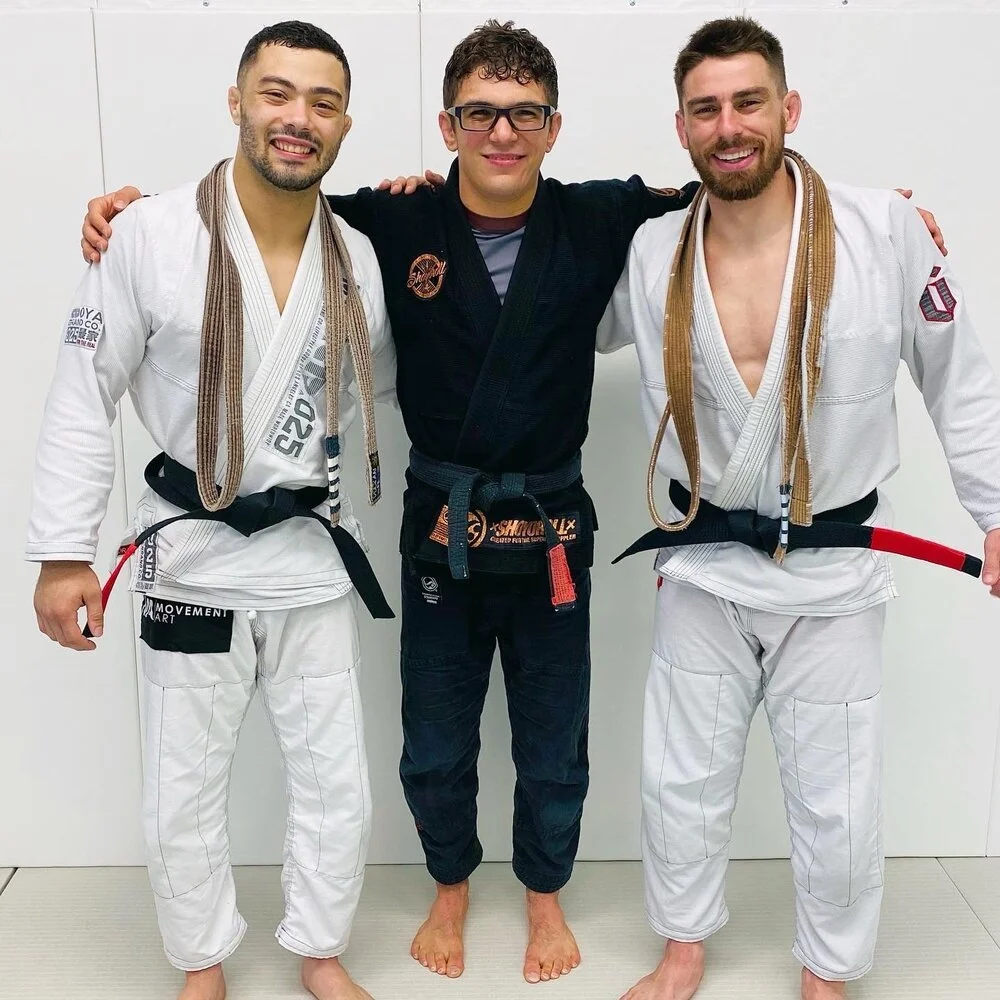
What the Launch of UFC’s BJJ League Means for the Future of Jiu-Jitsu
UFC is launching a professional Brazilian Jiu-Jitsu league. Here’s what it means for the sport and why it’s personal for Movement Art BJJ, led by black belts under Mikey Musumeci.
The Next Chapter of Brazilian Jiu-Jitsu Has Arrived
Brazilian Jiu-Jitsu is evolving and the UFC just made it official. This year, the UFC is launching its own professional grappling league: UFC Brazilian Jiu-Jitsu. This move isn’t just big it’s transformative. It signals that BJJ is no longer a niche pursuit. It’s a sport ready for the spotlight.
For us at Movement Art, it hits close to home. UFC BJJ’s debut event will be headlined by Mikey Musumeci, one of the most accomplished grapplers in history and our instructors, Danny Maira and Nick Salles, are both black belts under Mikey. His influence is woven into every class we teach and every technique we refine.
What Is UFC BJJ?
Launching during UFC International Fight Week (June 25, 2025), UFC BJJ will feature three championship title matches. The format will include a custom curved-wall grappling pit, designed to promote constant action, and an accompanying reality series called “Road to the Title”, with Mikey Musumeci and Rerisson Gabriel coaching two opposing teams.
UFC President Dana White has announced a $10–12 million investment into this league over the next year. The goal: to make Brazilian Jiu-Jitsu a mainstay for fans, not just fighters.
Why This League Changes Everything
1. BJJ Is Going Mainstream
With the UFC’s promotional muscle, more people than ever will discover the art of jiu-jitsu. This could be a turning point for the sport—similar to what The Ultimate Fighter did for MMA in the early 2000s.
2. Real Careers for Grapplers
Professional jiu-jitsu athletes have always faced challenges making a living. UFC BJJ offers real prize money, consistent exposure, and a potential career path for elite-level talent.
3. Rule Innovation That Pushes the Pace
The unique curved-wall arena and updated ruleset are designed to keep matches moving. This opens the door to a faster, more viewer-friendly version of the sport—without compromising its technical depth.
Why It Matters to You
This league doesn’t just represent the future of competitive BJJ, it reflects the values we live at Movement Art every day: progress, precision, and passion.
Mikey’s presence at the heart of UFC BJJ is a reminder of how far the art has come. And for anyone training at Movement Art, it’s a sign that you’re part of something much bigger. You’re learning the same principles, the same techniques, and the same systems that are shaping the global conversation around modern jiu-jitsu.
The Best Time to Start Is Now
Whether you want to compete or just improve, you’re training in the right place. Movement Art is led by instructors directly connected to the evolution of the sport. If you’ve been thinking about trying jiu-jitsu, now is the time.
✅ Beginner-friendly classes
✅ World-class instructors
✅ Supportive community
Your first class is free. Come see what it’s all about.

How to Make the Most of Your First 30 Days of BJJ
New to BJJ? Learn what to expect in your first 30 days of training at Movement Art in Warminster, PA. Tips, timeline, and beginner-friendly guidance.
Starting Brazilian Jiu-Jitsu is exciting but let’s be honest, it can also feel a little intimidating. You’re learning a new language, moving your body in unfamiliar ways, and walking into a tight-knit community that already seems to know what they’re doing.
At Movement Art in Warminster, PA, we specialize in helping beginners ease into the journey. Here’s what to expect in your first 30 days of training and how to make the most of it from day one.
Week 1: Just Show Up
Your only job this week? Walk through the door.
Don’t worry about knowing techniques, being in shape, or keeping up with others. Our coaches will guide you through the basics step by step. You’ll learn how to move safely, tap early, and stay present.
Tips for week one:
Wear comfortable workout clothes
Arrive 15 minutes early to meet your instructor
Let your training partner know you’re new
Ask questions. We love beginners who are curious
Week 2: Focus on the Fundamentals
Once you’ve broken the ice, it’s time to start noticing patterns. This week, you'll begin to understand basic positions: mount, guard, side control, and how they relate to each other.
Repetition is key here. Don’t worry about “mastering” anything, just focus on showing up consistently and absorbing the structure of the class.
What to expect:
Learning how to maintain and escape positions
Drilling with control—not strength
Gaining awareness of body movement and breathing
Week 3: Start Rolling (But Take It Slow)
By now, you’ll probably be invited to do some light “rolling” aka live grappling rounds. This is where BJJ starts to feel like a chess match.
Our instructors will pair you with experienced, controlled partners who will help you learn by feel, not by force. The goal here isn’t to win. It’s to survive, defend, and recognize opportunities.
Tips for week three:
Tap early and often. There’s no ego in safety
Ask your partner for feedback after the round
Celebrate small wins: good posture, good frames, good mindset
Week 4: Reflect and Commit
By your fourth week, something clicks. You’re not just attending class, you’re training. You understand what you’re doing (even if just a little), and you start feeling the benefits mentally and physically.
This is the week to reflect on your progress and decide: Is this something I want to pursue? If yes, this is the time to invest in your first gi, rashguard, or gear and maybe invite a friend to try it with you.
The Most Important Thing: Keep Showing Up
The first 30 days are less about skill and more about consistency. If you can build the habit now, everything else will come with time.
Whether you're a student, parent, or working professional in Bucks County, the hardest part is behind you once you’ve taken that first class. At Movement Art, we’ll help you with the rest—step by step.
Start Your Journey With a Free Week of Training
We’ve helped hundreds of students in Warminster begin their BJJ journey, and we’d love to help you too. Whether you’re looking to build confidence, get in shape, or find a new challenge, your first 30 days are just the beginning.
👉 Click here to claim your free trial. Let’s get started.

The Missing Piece in Your Fitness Routine? Try Jiu-Jitsu
Already active? Add challenge, mobility, and purpose to your training with BJJ at Movement Art in Warminster, PA. Free trial for Bucks County adults.
If you're already active, lifting weights, running, hitting group classes then you’re ahead of the game. But even the most committed routines can start to feel... well, routine. That’s where Brazilian Jiu-Jitsu (BJJ) comes in.
At Movement Art in Warminster, we work with athletes, parents, and professionals from all over Bucks County who’ve found that BJJ doesn’t replace their fitness, it elevates it. It brings new purpose, new challenge, and a level of mental engagement that most workouts just don’t offer.
It’s Not Just Another Way to Sweat
Jiu-Jitsu challenges your body in ways traditional workouts don’t. You’ll build:
Rotational core strength
Hip mobility and grip endurance
Explosive power through short bursts of movement
Long-duration cardio without even realizing it
You’re not just getting stronger, you’re learning to use your body in a new way. Every roll is a full-body workout wrapped in a skill-building session.
Functional Strength That Transfers to Real Life
We’ve seen weightlifters gain more body control. Runners improve their joint stability. Busy professionals boost their posture and energy through consistent training.
The physical benefits of BJJ aren’t just theoretical, they show up everywhere: on hikes, during sports, playing with your kids, and even in how you recover from other workouts.
Challenge Without the Burnout
Unlike lifting or cardio sessions where you may hit plateaus, BJJ constantly evolves. You’re not chasing numbers, you’re chasing knowledge and progress. That shift in focus makes training more sustainable and mentally rewarding.
You’re not just “working out.” You’re learning a craft, improving your focus, and sharpening your awareness—all while getting in top-tier shape.
A New Layer of Motivation and Community
You already know how to show up and push yourself, but BJJ gives you something more. It gives you training partners, not just fellow gym-goers. It gives you coaches, not just instructors.
At Movement Art, our adult beginners quickly realize that showing up isn’t just for them, it’s for the team. That kind of built-in motivation is what keeps people consistent long-term.
Already Active? You’re More Ready Than You Think
You don’t need to choose between the gym and the mats. In fact, some of our most successful students are people who combine both. Jiu-Jitsu adds variety, intensity, and purpose to your existing fitness goals.
👉 Click here to try a week of classes for free. Whether you’re a weekend warrior, gym rat, or just looking for something new, we’ll meet you where you’re at and take you further.

Lessons in Resilience: How Jiu-Jitsu Builds More Than Strength
Discover the mental benefits of Brazilian Jiu-Jitsu. Learn how training at Movement Art in Warminster, PA builds resilience, focus, and confidence for life.
For many people, Brazilian Jiu-Jitsu starts as a way to get in shape or learn a new skill. But after a few weeks on the mats, something deeper begins to shift. You realize BJJ isn’t just about physical conditioning, it’s a daily practice in patience, humility, and mental resilience.
At Movement Art in Warminster, PA, we’ve seen it time and time again: students come in for fitness, but stay because they’ve become mentally stronger. If you’re looking for something more meaningful than just a workout, here’s what you can expect to gain beyond the sweat.
You Learn to Stay Calm in Chaos
There’s nothing quite like grappling with another human being to show you how reactive your mind can be. At first, the stress hits hard, your heart races, you forget to breathe, and your thoughts scatter.
But over time, you learn to regulate. You begin to breathe deeply, slow down your thinking, and make decisions under pressure. It’s the same skillset that helps in everyday stress, whether it’s a tough day at work or a challenging moment with your kids.
Failure Becomes Fuel, Not Fear
In BJJ, getting “tapped out” isn’t losing, it’s learning. You’re put in difficult positions, you fail often, and then you get up and try again. That daily exposure to failure trains you to stop fearing it.
At Movement Art, our coaches reinforce this mindset. We don’t measure beginners by wins, we measure progress, consistency, and how well you bounce back from a tough round.
Progress Happens in Small, Honest Steps
There’s no shortcut in jiu-jitsu. No fast track to becoming “good.” You show up, do the work, and learn something new each class. For busy professionals and parents in Bucks County, this slow-but-steady progress becomes a grounding ritual.
It reminds you that not everything needs to be rushed and some of the most powerful growth happens gradually, with effort and patience.
You Start Carrying Yourself Differently
After just a few weeks of consistent training, students often tell us the same thing: “I feel different.” You walk a little taller. You speak with more clarity. You begin to trust your body, and your mind, in ways you didn’t before.
This change isn’t just physical. It’s the result of earning small victories every day in a challenging environment surrounded by supportive people. That’s the culture we’ve built at Movement Art in Warminster and it’s why so many locals keep showing up.
Ready to Build More Than Strength? Start with a Free Trial
If you're searching for a gym in Bucks County that offers more than just a workout, Brazilian Jiu-Jitsu might be exactly what you didn’t know you needed. At Movement Art, we welcome beginners, professionals, parents, and anyone ready to grow mentally and physically.
👉 Click here to try a free week of classes and experience it for yourself.

BJJ Gear 101: Essential Equipment - BJJ for Beginners
New to BJJ? Learn what gear you need for gi and no-gi training in Warminster, PA. Get beginner advice and free trial access at Movement Art Jiu-Jitsu.
Starting Brazilian Jiu-Jitsu can feel overwhelming but gearing up shouldn’t be. Whether you're walking into your first class at Movement Art in Warminster or just researching “what gear do I need for BJJ?”, this guide breaks down exactly what you need (and don’t need) to begin training with confidence.
What You Really Need to Start
Good news: You don’t need to buy a ton of gear right away. For your first few classes, just wear:
Athletic shorts (no zippers or pockets)
A fitted T-shirt or rashguard
Flip-flops for off-mat walking
A bottle of water
Many of our beginners train in basic gym clothes at first. Once you decide to stick with it, we’ll help you gear up properly.
Essential BJJ Gear (Gi Training)
If you're attending gi classes, here’s what you’ll eventually need:
BJJ Gi (Kimono): A durable jacket and pants set made for grappling. We’ll help you choose one that fits and holds up over time.
BJJ Belt: Usually comes with your gi. White belt is the starting point for all beginners.
Mouthguard: Protects your teeth and gums—especially helpful during live rolling.
Optional (but useful):
Rashguard: Can be worn under the gi to reduce friction and stay comfortable.
Bag: To carry sweaty gear post-training.
Essential BJJ Gear (No-Gi Training)
For no-gi classes, the gear is a little different:
Rashguard: A tight-fitting shirt that won’t get caught or stretch during grappling.
Grappling Shorts: Durable shorts without pockets or metal parts. Regular gym shorts aren’t ideal.
Mouthguard: Again, highly recommended.
Compression Shorts or Spats (optional): Add comfort and help prevent mat burn.
Where to Buy BJJ Gear in Warminster
You can find high-quality gear with many companies online. We have several brands we recommend including the Philadelphia based brand Few Will Hunt. We offer recommendations and often stock beginner-friendly options at the gym. Don’t guess, ask your coach. We’ll help you find the right fit.
Don’t Let Gear Be a Barrier
Too many beginners delay starting BJJ because they think they need to be fully outfitted first. You don’t. At Movement Art, your first class is free, and we’ll work with you using whatever gear you have on hand. We want you to feel welcome, not overwhelmed.
Try a Free Week at Movement Art in Warminster
Still wondering what you need for your first BJJ class? The best answer is simple: just show up. We’ll take care of the rest.
👉 Click here to claim your free trial and get hands-on guidance, expert coaching, and everything you need to start your journey with confidence.

Preparing for Your First BJJ Tournament: A Bucks County Competitor’s Guide
Competing for the first time? Learn how to prepare for your first BJJ tournament with tips from Movement Art Jiu-Jitsu in Warminster, PA. Free trial available.
So you’ve been training Brazilian Jiu-Jitsu for a few months, and now you’re thinking about testing your skills in a tournament. That’s a huge milestone, and one that comes with equal parts excitement and nerves.
At Movement Art Jiu-Jitsu in Warminster, we’ve coached students of all levels through their first competitions. Whether you’re looking at a NAGA or Grappling Industries event in the Philadelphia area or something local here in Bucks County, this guide will help you walk into your first tournament feeling prepared and confident.
1. Give Yourself Time to Prepare
Ideally, you should start preparing at least 6–8 weeks in advance. That gives you time to sharpen your techniques, improve your conditioning, and get comfortable with the ruleset.
At Movement Art, we encourage new competitors to communicate with their coaches early so we can tailor training sessions to your needs and simulate match scenarios during live rolling.
2. Know the Rules (And Ask Questions)
Every tournament has its own rules, especially when it comes to points, legal submissions, and match duration. Whether you're competing in gi or no-gi, take time to review the rules of the organization you’ve signed up for.
Unsure about something? Ask your coaches. We’ve coached competitors at all levels and can walk you through exactly what to expect.
3. Practice Like You’ll Compete
During the lead-up to the tournament, treat every training session like it’s a match. Focus on:
Positional sparring (e.g., escaping bad spots)
Improving your takedown or guard pull
Managing your energy during intense rolls
Also, start simulating matches with teammates. Set a timer, go live, and try to score points while staying composed under pressure.
4. Manage Your Weight Safely
If your tournament has weight classes, make sure you know whether it’s with or without the gi. Many beginners make the mistake of weighing themselves without gear and then panic cut at the last minute.
Focus on eating clean, staying hydrated, and making weight over time, not through crash diets. Coaches at Movement Art can offer guidance to make sure you’re on track.
5. Pack Smart and Stay Calm on Tournament Day
Tournament days can be hectic. Here’s what you’ll want to bring:
Your gi or no-gi gear (and backups)
Water, snacks, and ID
Flip-flops and warm-up clothes
Headphones or something to help you focus
When you arrive, check in early, find your mat, and stay loose. You’ll probably be nervous, everyone is. But remember: this is just another day on the mats, with a little more adrenaline.
6. Win or Lose, It’s a Win
At Movement Art, we emphasize growth over gold medals. Your first competition is about learning, pushing past fear, and showing up for yourself.
Some of our members have gone on to high-level competitions. Others just wanted to try something new and came away with a deeper love for BJJ. Whatever your goal, we’re here to support it.
Thinking About Competing? We’ve Got You Covered
From first-timers to seasoned competitors, our team at Movement Art Jiu-Jitsu in Warminster provides structured support, world-class coaching, and a community that’s behind you every step of the way.
👉 Talk to a coach or sign up for a free trial—and let’s get you ready for your first tournament.

Gi vs. No-Gi Jiu-Jitsu: What Beginners in Bucks County Should Know
Confused about gi vs. no-gi BJJ? Learn the differences, pros and cons, and what beginners in Warminster, PA should start with. Free trial classes at Movement Art.
If you're new to Brazilian Jiu-Jitsu (BJJ), one of the first questions you’ll face is: Should I start with gi or no-gi? It’s a common concern, especially for beginners in Bucks County searching for local BJJ classes.
At Movement Art Jiu-Jitsu in Warminster, we offer both gi and no-gi options, and this guide will help you understand the differences, the benefits of each, and how to choose what’s right for you.
What Is Gi Jiu-Jitsu?
Training in the gi means wearing a traditional kimono style uniform. The gi allows for a wide range of grips on the collar, sleeves, and pants which slows the pace down and emphasizes technical control.
Gi training tends to reward precision and patience. It teaches you how to break posture, manage distance, and develop grip strength. It’s especially helpful for beginners learning the fundamentals of control and position.
What Is No-Gi Jiu-Jitsu?
No-gi classes are done in athletic wear like rashguards and grappling shorts. Without grips on clothing, the game becomes faster-paced and more movement-based.
No-gi is often seen in mixed martial arts (MMA) and is popular among people who want to train with a focus on speed, athleticism, and submissions like leg locks. It’s a great option for those who enjoy a dynamic, sweat-heavy workout.
Which Should I Start With?
The truth is, you can’t go wrong with either. At Movement Art, we recommend starting with whichever class fits your schedule or interests you more. Many of our students begin with one and gradually explore both.
If you prefer a slower, more methodical pace to learn positions and control, gi might be your best entry point. If you’re coming from a wrestling or athletic background, or just want to jump into fast-paced action, no-gi could be a better fit.
How We Teach Gi and No-Gi at Movement Art
Our instructors approach both styles with beginner-friendly, high-level instruction. Whether it’s your first time in a gi or you're brand new to no-gi, our Warminster facility offers structured classes that support your growth from day one.
You’ll have access to evening and weekend gi and no-gi classes, allowing you to explore both formats without pressure.
Why Train Both?
Once you’ve got a few months of training under your belt, exploring both styles can help round out your skills. Gi improves your grip fighting and defensive strategy. No-gi sharpens your transitions and scramble ability.
At the end of the day, both are still Brazilian Jiu-Jitsu. They share the same core principles: leverage, control, timing, and technique.
Still Unsure? Start with a Free Trial Week
If you’re in Bucks County and searching for “gi vs. no-gi BJJ near me,” we’ve got you covered. At Movement Art in Warminster, we’ll walk you through both styles and help you find the one that suits your goals best.
👉 Try a week of classes for free—gi, no-gi, or both. No experience required. Just bring comfortable clothes and an open mind.

The Rise of Brazilian Jiu-Jitsu in Bucks County, PA: Why Local Interest is Surging
See why BJJ is booming in Bucks County, PA. Learn how locals are trading in gyms for jiu-jitsu—and how to join the Movement Art community in Warminster.
Over the past decade, Brazilian Jiu-Jitsu (BJJ) has exploded in popularity across the U.S. and Bucks County is no exception. From Warminster to Doylestown, more and more residents are trading in their gym memberships for time on the mats. But what’s behind this boom in BJJ interest locally? And why are people of all ages and backgrounds choosing to train at places like Movement Art Jiu-Jitsu?
Let’s explore why BJJ is on the rise in Bucks County and how you can get involved in this growing martial arts movement.
A National Trend That’s Hitting Home
Nationwide, the popularity of BJJ has more than doubled in the past 10 years, fueled by its presence in MMA, growing female participation, and a cultural shift toward functional fitness. Here in Bucks County, we’re seeing the same trend.
Movement Art Jiu-Jitsu in Warminster is at the center of this surge. Founded by Daniel Maira and Nick Salles, Movement Art offers world-class instruction right here in the suburbs of Philadelphia. That means you no longer need to drive to a big city to access elite-level coaching.
Why People Are Choosing BJJ Over the Gym
For many in Bucks County, traditional gyms feel repetitive. BJJ offers something different: a constantly evolving skill set, mental stimulation, and a strong sense of community.
Parents are enrolling their kids for the confidence and discipline it builds. Adults are signing up for stress relief, practical self-defense, and a healthier lifestyle. Former athletes, professionals, and weekend warriors alike are finding a new passion on the mats.
Community, Not Competition
While BJJ has its competitive side, most people who start aren’t chasing medals, they’re looking for growth. At Movement Art, we’ve built a community that welcomes everyone, whether you want to compete or just improve your fitness and mindset.
It’s not uncommon to see tech professionals, construction workers, teachers, and students all sharing the mat with each supporting one another, pushing boundaries, and building confidence together.
More Women, More Families, More Beginners
One of the biggest shifts in the local BJJ scene is how diverse it's become. We’re seeing more women join our beginner classes and more families signing up together. Movement Art’s inclusive atmosphere and clear beginner pathways make it easier than ever for someone with no experience to walk in and feel comfortable.
If you’ve been on the fence about trying martial arts, now is the best time to jump in.
BJJ in Bucks County: It’s Just Getting Started
Local tournaments like NAGA and Grappling Industries are now regular fixtures in the Philadelphia area, giving students of all levels the chance to test their skills. Movement Art competitors regularly attend these events, and our coaches actively mentor those looking to prepare for the competition scene.
But even if you never compete, training BJJ in Warminster gives you access to a world-class team, an inclusive community, and a fitness lifestyle that keeps growing every year.
Curious About BJJ? We’ll Help You Get Started
Whether you're brand new or just returning to the mats, Movement Art Jiu-Jitsu is ready to welcome you. Our Warminster location serves all of Bucks County, and we offer a free trial week so you can see what the hype is about. No pressure, no obligation.
👉 Click here to start your free trial and experience the rise of BJJ for yourself.

BJJ for Kids in Warminster, PA: Building Confidence and Discipline Through Jiu-Jitsu
Discover BJJ for kids in Warminster, PA. Boost confidence, discipline, and anti-bullying skills in a fun, safe environment. Free trial class available.
As a parent in Bucks County, you want your child to grow up confident, disciplined, and resilient. Brazilian Jiu-Jitsu (BJJ) offers all of that and more. At Movement Art Jiu-Jitsu in Warminster, PA, we help kids build character while learning a skill that keeps them physically active and mentally strong.
Whether you’re searching for “kids martial arts near me” or wondering if BJJ is the right fit for your child, here’s why families throughout Warminster are choosing BJJ at Movement Art.
1. Confidence That Lasts Beyond the Mat
BJJ teaches children how to face challenges head-on. Instead of flashy kicks, they learn how to problem-solve, stay calm under pressure, and overcome obstacles. Every class is an opportunity for your child to gain confidence, whether it’s through learning a new move or completing a tough drill.
We’ve seen even the shyest kids blossom into leaders thanks to the positive reinforcement and structured environment our program offers.
2. Discipline in a Fun, Engaging Environment
Kids thrive in environments that challenge them while keeping them engaged. BJJ does exactly that. Classes at Movement Art are designed to be both structured and fun. Your child will learn respect for instructors, teammates, and themselves—while still laughing, playing games, and having a blast on the mats.
It’s not just about martial arts. It’s about setting goals, following through, and building habits that serve them outside the gym.
3. A Powerful Anti-Bullying Tool
One of the top reasons parents choose BJJ is its effectiveness in bullying prevention. Your child will learn how to stay calm in conflict, how to escape dangerous situations, and—most importantly—how to avoid escalating them. The confidence that comes with knowing how to protect oneself often makes children less likely to be targeted in the first place.
At Movement Art, we teach kids when to use their skills and when to walk away. The focus is always on control, awareness, and responsibility.
4. Community and Mentorship
Our kids’ program in Warminster isn’t just a class, it’s a community. Students are coached by black belts under world champion Mikey Musumeci, including instructors who serve as positive role models both on and off the mats.
Your child won’t just learn techniques, they’ll build friendships, find mentors, and become part of a supportive, inclusive team that celebrates effort and growth.
5. A Great Option for Active Families
Many of our families choose Movement Art because they want an activity that fits into their lifestyle. We offer evening and weekend classes that make it easy to fit BJJ into your family’s schedule. Plus, some of our members train alongside their kids, making it a shared experience rooted in health, growth, and connection.
Ready to Get Started? Try a Class for Free
If you're searching for “BJJ for kids in Warminster PA” or “children’s martial arts in Bucks County,” Movement Art Jiu-Jitsu is the place to begin. Our kids’ program welcomes students of all experience levels and focuses on building confidence, discipline, and real-world self-defense skills in a safe, fun environment.
👉 Click here to book a free trial class or stop by our Warminster location to meet our instructors.

BJJ for Beginners in Bucks County: 5 Tips to Kickstart Your Training Journey
New to BJJ? Learn how to start training in Warminster, PA with beginner tips, gear advice, and a free trial at Movement Art.
Starting Brazilian Jiu-Jitsu (BJJ) can feel overwhelming, but it doesn’t have to be. Whether you're searching for “BJJ for beginners in Bucks County PA” or just wondering what to expect from your first class, Movement Art Jiu-Jitsu in Warminster is here to help you take that first step with confidence.
Here are five essential tips to make your introduction to BJJ smooth, exciting, and empowering.
1. Choose the Right Gym for Beginners
Not all BJJ gyms are the same—especially when you’re new. At Movement Art, we specialize in creating a friendly, ego-free environment for first-timers. Our founders, Daniel Maira and Nick Salles, are black belts under world champion Mikey Musumeci, and they’ve built a program that blends elite instruction with a welcoming vibe for beginners of all ages.
Look for beginner-specific classes, a clean facility, and instructors who take time to explain—not just demonstrate. A trial class or visit is a great way to see if the vibe is right for you.
2. You Don’t Need to Be in Shape to Start
One of the most common concerns we hear from beginners is: “Do I need to get in shape first?” The answer is no. BJJ helps you get in shape while you learn. Classes at Movement Art are designed to accommodate all fitness levels, with coaches ready to modify techniques based on your needs.
Whether you're stepping onto the mats for the first time or coming back after a break, we’ve got you.
3. Wear Comfortable Clothes (Don’t Worry About Gear Yet)
For your first few classes, basic gym clothes, like athletic shorts and a T-shirt, are totally fine. No gi? No problem. When you're ready to commit, we’ll help you choose the right gi or no-gi gear from trusted vendors or our own pro shop.
Pro tip: bring water, trim your nails, and show up about 15 minutes early to meet your instructor and get oriented.
4. Focus on Learning, Not Winning
BJJ is about progress—not perfection. At Movement Art, our beginner students are encouraged to ask questions, go slow, and focus on learning proper technique rather than “winning” rolls. Everyone remembers their first class, and no one expects you to know what you’re doing on day one.
Think of it like learning a language. It takes time, but every class builds your skill and confidence.
5. Make It a Habit, Not a Phase
The hardest part of BJJ is consistency, especially in the beginning. We recommend attending at least 2 classes per week to start building momentum. Our class schedule is flexible, with options for evening and weekend classes that work around busy lives.
Plus, once you’re part of our community, you’ll quickly see why students stick around. The friendships you form on the mats are just as rewarding as the skills you learn.
Ready to Try a Class? Your First Week is Free
If you're searching for “BJJ near me” in Bucks County, this is your sign to stop scrolling and start training. At Movement Art Jiu-Jitsu in Warminster, we make starting BJJ easy, safe, and fun. Your first week is completely free—no gear, no pressure, just a chance to experience the art for yourself.
👉 Book your free trial now or stop by our gym to say hello. We’ll see you on the mats!